

Get our app

Download on the App Store

10-Week-Old Baby: Development Week by Week

Your baby is officially 10 weeks old and you should be quite used to the idea of motherhood. From now on, your baby`s movements will increase.

Baby Development
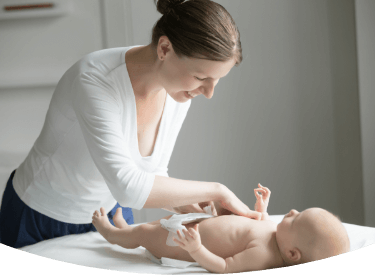
Your little one`s movements are getting a little more coordinated. This week, it will probably be able to move from side to side and back to side. It needs about a month to start a full turn because it needs stronger neck and arm muscles for this maneuver. Continue to put your baby on its tummy so it has plenty of tummy time each day to develop these important muscles.

Don’t Forget Birth Control!

Can you get pregnant if you are breastfeeding? What if you didn`t get your period after giving birth?

The answers are yes and yes. Contrary to popular belief, breastfeeding itself is not a form of birth control. And you will start ovulating without menstruating, so you won`t get any warning when your fertility returns. This is why you should use birth control as soon as you start having sex again - unless you plan on giving your newborn a sibling who is very close in age.

Your healthcare provider can help you understand all your options, but here are some considerations:

What birth control method did you use before getting pregnant? You cannot continue where you left off. If you used a diaphragm, you will need to reinsert it after giving birth as you may need a different size.

If you were using a hormonal form of birth control before getting pregnant and are now breastfeeding, you may want a different formulation, such as the progesterone-only mini-pill.

If you don`t want to get pregnant again for a few years, you may want to consider getting an IUD (intrauterine device) or a birth control implant.

Condoms can be a good choice for new moms because they don`t affect their breast milk and your hormones, they may be easier to remember than taking the pill once a day. Also, condoms make birth control your partner`s responsibility.

Milestones

You should pay attention to how your baby uses its arms and chest during its tummy time and its development. If he can hold its head quite well, you can gently push its legs to encourage it to crawl. It won`t be able to fully crawl at this stage, but it will trigger it to figure out how to do it. Extend the duration of this exercise by a few minutes each day to spread it over a cumulative time of about half an hour throughout the day.

It is necessary to check whether the legs are getting stronger as well as the upper body strength. Since most of its time will be spent lying on its back or on its stomach, its legs will not have a chance to bear its own weight. At about 10 weeks of age, its legs will begin to gain strength. You can gently massage your baby`s legs and cycle them to strengthen its legs.

Nutrition

If you want to start getting back to your normal life, being able to breastfeed anytime anywhere is great. Adequate breastmilk/food, feeding in the correct position, burping are still the keys for feeding time.

Sleep

Your 10-week-old baby`s sleep patterns will now begin to fall into the realm of predictability. If your baby tends to get up early in the morning, the first feed of the day may cause it to fall asleep soon after feeding is complete. Other times, a first feed and a good bath can energize it, keeping it happy and excited in the morning. One of the most important problems faced by almost all mothers is to put their babies to sleep during the daytime naps. You may be tempted to try all the techniques for a little nap. For this, our recommendation is to tire them out with games and activities while they are awake.

Your sleep routine may include rocking, singing, taking a bath, a bedtime story, walking around the house, and saying goodnight to each room—anything that makes sense for your family. The ritual will develop as your baby grows.

Behavior

When your baby wakes up, it will be more energetic and excited than before. Reaching out for whatever it can, making a lot of noise, and being able to hold its head up when it`s on its stomach, all of this will make it realize it`s grown.

Your baby will now begin to purr, chirp and even use its saliva in funny ways. When it presses your face to your baby`s stomach and blows air on its skin, it will like it a lot and even laugh. It will try to blow air like this with its mouth.

Crying

Your baby`s cries may get out of control this week. After putting your little one to sleep, you may hear little screams as you turn your back with great happiness. If it wakes up in the middle of the night on an empty stomach, the resulting wail can wake everyone in your household. If you leave your baby alone for a moment, it will shout in different ways to get your attention and get you back to it. All these cries are different and can be recognized over time.

With any type of crying, it`s important to respond to it as soon as possible so as not to let it create a longer crying routine. After all, the only way it can successfully communicate its needs to you is to cry.

Care Tips

  1. Make sure you are feeding the right amounts at the right time.
  1. Take note of the different crying patterns and make sure they are addressed as quickly as possible.
  1. Follow your baby`s schedule and try to figure out what it might need before it asks for it. This makes your baby calmer and more harmonious.
  1. Play joyfully with your baby. We say play with joy because babies feel everything. If you really enjoy it, it will be attached to you and become a harmonious baby thanks to these quality times you spend.
  1. Really play with it while you`re playing with it, really feed it while feeding it... For example, don`t take a phone in your hand and use social media while breastfeeding, and don`t even do this, keep your baby away from devices that emit radiation as much as you can. Or do not complete your remaining presentation with your mind while playing the game. Stay in the moment, stay with your baby. Of course, it`s nice to be with your baby for 24 hours, but the most important thing is the quality of the time you spend.
  1. By taking it somewhere in the open air, you both provide fresh air and support its sensory-social-emotional development.
  1. Give it enough room to stretch and move its arms and legs. Put a blanket on the floor and let it move as it pleases.
  1. Before stranger anxiety kicks in, it`s a good time to introduce your baby to other people who can care for it in the weeks and months to come. Have potential caregivers come and spend time with you and your baby.

Tests and Vaccines

If the 8th week vaccinations and controls have been successfully applied, there is nothing to be done at this stage.

Plays and Activities

Lie on the floor and hold your baby firmly in your hands. Use it as a support as you stretch your thighs over your baby. Then, holding it tightly with your hands, slowly raise and lower your legs and let your baby fly. Make exciting sounds and look at it with excitement. Your baby will likely start giggling. But if your baby doesn`t like it, don`t repeat it.

Your baby`s eyesight will now be better; you can make a reflection on the wall or ceiling in front of it using a strong light or a bright piece against sunlight. Let it appear and disappear from time to time and watch your baby cheer. Your baby may even try to hold back the light reflected on the wall.

When to Apply to The Doctor?

Increased interaction with other people may predispose your baby to infections from others, such as a cold or cough. Make sure that you always keep your baby`s nose open, wash its hands and face frequently during the day, and disinfect the items it uses periodically. If the infection gets worse and your baby is tugging at its ears, is constipated, and has a fever, this could be a sign of something severe and may require immediate medical attention.

See your doctor if you have worrying mood changes, changes in appetite, fever, abnormally loose bowel movements, a severe decrease in the number of wet diapers, persistent redness, eye or ear discharge, and prolonged unusual crying.

10-Week-Old Baby: Development Week by Week

Your baby is officially 10 weeks old and you should be quite used to the idea of motherhood. From now on, your baby`s movements will increase.

Baby Development

Your little one`s movements are getting a little more coordinated. This week, it will probably be able to move from side to side and back to side. It needs about a month to start a full turn because it needs stronger neck and arm muscles for this maneuver. Continue to put your baby on its tummy so it has plenty of tummy time each day to develop these important muscles.

Don’t Forget Birth Control!

Can you get pregnant if you are breastfeeding? What if you didn`t get your period after giving birth?

The answers are yes and yes. Contrary to popular belief, breastfeeding itself is not a form of birth control. And you will start ovulating without menstruating, so you won`t get any warning when your fertility returns. This is why you should use birth control as soon as you start having sex again - unless you plan on giving your newborn a sibling who is very close in age.

Your healthcare provider can help you understand all your options, but here are some considerations:

What birth control method did you use before getting pregnant? You cannot continue where you left off. If you used a diaphragm, you will need to reinsert it after giving birth as you may need a different size.

If you were using a hormonal form of birth control before getting pregnant and are now breastfeeding, you may want a different formulation, such as the progesterone-only mini-pill.

If you don`t want to get pregnant again for a few years, you may want to consider getting an IUD (intrauterine device) or a birth control implant.

Condoms can be a good choice for new moms because they don`t affect their breast milk and your hormones, they may be easier to remember than taking the pill once a day. Also, condoms make birth control your partner`s responsibility.

Milestones

You should pay attention to how your baby uses its arms and chest during its tummy time and its development. If he can hold its head quite well, you can gently push its legs to encourage it to crawl. It won`t be able to fully crawl at this stage, but it will trigger it to figure out how to do it. Extend the duration of this exercise by a few minutes each day to spread it over a cumulative time of about half an hour throughout the day.

It is necessary to check whether the legs are getting stronger as well as the upper body strength. Since most of its time will be spent lying on its back or on its stomach, its legs will not have a chance to bear its own weight. At about 10 weeks of age, its legs will begin to gain strength. You can gently massage your baby`s legs and cycle them to strengthen its legs.

Nutrition

If you want to start getting back to your normal life, being able to breastfeed anytime anywhere is great. Adequate breastmilk/food, feeding in the correct position, burping are still the keys for feeding time.

Sleep

Your 10-week-old baby`s sleep patterns will now begin to fall into the realm of predictability. If your baby tends to get up early in the morning, the first feed of the day may cause it to fall asleep soon after feeding is complete. Other times, a first feed and a good bath can energize it, keeping it happy and excited in the morning. One of the most important problems faced by almost all mothers is to put their babies to sleep during the daytime naps. You may be tempted to try all the techniques for a little nap. For this, our recommendation is to tire them out with games and activities while they are awake.

Your sleep routine may include rocking, singing, taking a bath, a bedtime story, walking around the house, and saying goodnight to each room—anything that makes sense for your family. The ritual will develop as your baby grows.

Behavior

When your baby wakes up, it will be more energetic and excited than before. Reaching out for whatever it can, making a lot of noise, and being able to hold its head up when it`s on its stomach, all of this will make it realize it`s grown.

Your baby will now begin to purr, chirp and even use its saliva in funny ways. When it presses your face to your baby`s stomach and blows air on its skin, it will like it a lot and even laugh. It will try to blow air like this with its mouth.

Crying

Your baby`s cries may get out of control this week. After putting your little one to sleep, you may hear little screams as you turn your back with great happiness. If it wakes up in the middle of the night on an empty stomach, the resulting wail can wake everyone in your household. If you leave your baby alone for a moment, it will shout in different ways to get your attention and get you back to it. All these cries are different and can be recognized over time.

With any type of crying, it`s important to respond to it as soon as possible so as not to let it create a longer crying routine. After all, the only way it can successfully communicate its needs to you is to cry.

Care Tips

  1. Make sure you are feeding the right amounts at the right time.
  1. Take note of the different crying patterns and make sure they are addressed as quickly as possible.
  1. Follow your baby`s schedule and try to figure out what it might need before it asks for it. This makes your baby calmer and more harmonious.
  1. Play joyfully with your baby. We say play with joy because babies feel everything. If you really enjoy it, it will be attached to you and become a harmonious baby thanks to these quality times you spend.
  1. Really play with it while you`re playing with it, really feed it while feeding it... For example, don`t take a phone in your hand and use social media while breastfeeding, and don`t even do this, keep your baby away from devices that emit radiation as much as you can. Or do not complete your remaining presentation with your mind while playing the game. Stay in the moment, stay with your baby. Of course, it`s nice to be with your baby for 24 hours, but the most important thing is the quality of the time you spend.
  1. By taking it somewhere in the open air, you both provide fresh air and support its sensory-social-emotional development.
  1. Give it enough room to stretch and move its arms and legs. Put a blanket on the floor and let it move as it pleases.
  1. Before stranger anxiety kicks in, it`s a good time to introduce your baby to other people who can care for it in the weeks and months to come. Have potential caregivers come and spend time with you and your baby.

Tests and Vaccines

If the 8th week vaccinations and controls have been successfully applied, there is nothing to be done at this stage.

Plays and Activities

Lie on the floor and hold your baby firmly in your hands. Use it as a support as you stretch your thighs over your baby. Then, holding it tightly with your hands, slowly raise and lower your legs and let your baby fly. Make exciting sounds and look at it with excitement. Your baby will likely start giggling. But if your baby doesn`t like it, don`t repeat it.

Your baby`s eyesight will now be better; you can make a reflection on the wall or ceiling in front of it using a strong light or a bright piece against sunlight. Let it appear and disappear from time to time and watch your baby cheer. Your baby may even try to hold back the light reflected on the wall.

When to Apply to The Doctor?

Increased interaction with other people may predispose your baby to infections from others, such as a cold or cough. Make sure that you always keep your baby`s nose open, wash its hands and face frequently during the day, and disinfect the items it uses periodically. If the infection gets worse and your baby is tugging at its ears, is constipated, and has a fever, this could be a sign of something severe and may require immediate medical attention.

See your doctor if you have worrying mood changes, changes in appetite, fever, abnormally loose bowel movements, a severe decrease in the number of wet diapers, persistent redness, eye or ear discharge, and prolonged unusual crying.