

Get our app

Download on the App Store

12-Week-Old Baby: Development Week by Week

Your little one has been with you for three months. Your sleep schedule must be gone for a moment, maybe you don`t have time to look at yourself in the mirror and you can understand the term tiredness that new mothers talk about very well, but once you look at your baby, you forget it all. After all, your baby is worth it!

Baby Development

This is mostly when your baby will go through a rapid growth phase. More feedings and possibly irregular feeding times mean fewer breaks in between and waking up frequently at night to feed your baby. Because the 3rd month is an important growth spurt period.

It is starting to understand who is who in its life and definitely prefers you, your partner, and some over others. It may make eye contact with you or look for you in a room, moving its arms excitedly or smiling when it finds you. It may even find your scent calming and comforting.

Research shows that babies whose parents talk to them intensely have higher IQs and larger vocabulary when they grow up than other children, so interaction is especially important right now.

Milestones

At 12 weeks, your baby will begin to understand what`s going on around it and how things are going. For example, when feeding time approaches, it will understand that it will naturally be fed and will prepare for it. By the end of the 3rd month, your baby can:

  1. Raise his head between 45 and 90 degrees when it is on his stomach.
  1. Follow an object 15 cm away from its face from beginning to end.
  1. Laugh loudly.
  1. Clasp both hands and begin to follow its hands.
  1. Scream of satisfaction.
  1. Hold its head upright when seated upright.
  1. Lift itis chest from the ground with the help of its arms when on its stomach.
  1. Pay attention to small objects.
  1. Reach and grasp an object.
  1. Control its head when its arms are pulled to sit up.
  1. Turn to the direction of the voice (especially its mother`s voice).
  1. Make consonant combinations like gurgle.

Nutrition
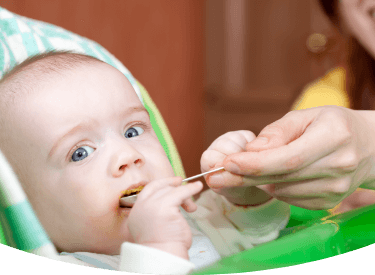
The stomach capacity of a three-month-old baby is 150-180 ml. It should be breastfed 4-8 times a day.

A 3-month-old baby`s diet is usually stable. It wakes up at about the same time, sucks, stays awake for a short time, then sleeps and wakes up again, sucks and then takes a midday nap. After waking up from its noon nap, it will stay awake for a longer period of time until the evening. This is usually the case at 3 months for most babies.

With the rapid growth that occurs at this stage, your baby`s nutritional demands may increase. Your baby grows maximally while it sleeps, so it may wake up with intense hunger and cry to suckle. Breastfeeding every 3 hours is ideal for three-month-old babies, but you can breastfeed more often if your baby isn`t getting enough.

Increasing food demand does not automatically require switching to different food products to satiate it. Initially, your breasts may not be able to produce as much milk as your little one needs and you may need to supplement this with some formula. But in most cases, within a few days, your body understands the increased demand and increases breast milk production.

Sleep

Baby`s 12-week sleep schedule is pretty much settled, and most sleep becomes through a significant portion of the night after feedings. Ideally, the baby sleep pattern from the 3rd to the 6th month is as follows;

Number of daytime naps is 3, Daytime naps are 1-2 hours, Time to stay awake between two naps is 2 hours, Nighttime sleeping time is 20.00-22.00, Nighttime sleep time is 9-12 hours, Total daily sleep time is 12-14 hours.

You can begin to gradually extend the breastfeeding interval. For this, our recommendation is that you first reduce your night feedings with practice. To make it fall asleep longer, 3 months old baby night feeding, no longer 3-4 times; it may only happen 1-2 times. You should even make sure that you are well fed during the day to breastfeed less at night; You can add 1 or 2 of your night meals to the daytime. If your baby falls asleep while nursing, you should burp it and breastfeed again before it dozes off. Thus, it can sleep more soundly.

Your baby may be used to sleeping on the lap or with the sleep support you provide. If it refuses to sleep unless it is cuddled, supported, this could soon become a problem for you. Alternatively, when it`s really sleepy, you can put it to bed and hum a lullaby as it falls asleep. It may take a few days to get used to it, but after a while, it will get used to sleeping constantly without support like being cuddled. However, if your baby overreacts and cries, postpone this training. You can try again after a while. Ask your partner for support if you are very tired and have missed a few nights of sleep, or if your baby is bottle-fed. If you are breastfeeding, entrust your partner to ensure that you do not fall asleep while your baby is breastfeeding, as this could put you both at risk of harm. Constant insomnia can cause involuntary falling asleep. At such times, it is recommended to take your sleep with the support of your spouse or another relative; Lack of sleep causes stress, decreased milk supply and difficulty in caring for your baby.

12-week-old babies will be dying to start rolling around. Therefore, it is more important than before to keep it swaddled and lay it on its back safely while it sleeps.

Behavior

The concept of cause and effect begins to develop in your baby`s brain during this time.

Its hands will still lack coordination, for example, while swinging the rattle, it may hit itself on the face. Make sure your baby doesn`t hurt itself and choose soft toys instead. With the increase in strength, your baby`s grip will be extremely strong and you will find that when it holds your finger, it will not let go that easily. Its feet start to move a lot and the classic mouth-to-mouth trend continues.

If your baby gets a little too much excited or makes throaty noises, you may see a few drops of milk in its mouth. This is normal as long as the amount is not too much otherwise it could be a sign of vomiting.

Crying

There is still a long time before your baby stops crying for no apparent reason. But by now, you`ll be in a much better position to understand what it wants when it cries. If you are one of those mothers who always have a crying baby, enlist the help of other family members. Getting angry or stressed with your baby will only intensify its crying and frustrate you even more. Be sure to get support so that you never lose your compassion. Even if it`s half an hour every day, take time for yourself, don`t forget the happy mom happy baby formula.

Care Tips

  1. Continue to encourage your little one to try new activities that will help its physical, cognitive, communicative, social and emotional development. Most importantly, have a good time with your little one and enjoy the motherhood period.
  1. Make sure that your baby does not have hard, small and sharp objects near it, because its eager hands will find them and start playing right away.
  1. Keep a routine of feeding, play and sleep that is repeated daily. Your baby will start to get used to it and will feel safe as it will know what to expect next.
  1. You can arrange massage hours and massage with products suitable for its skin. This will both relax it and nourish its skin.
  1. During this period, you can give your baby a bath once a day, or you can plan it every other day. The important thing is to establish a regular maintenance routine for it.
  1. It laughs, examines itself, rolls over, even gets angry! If you want to follow this change with photos; You can have every month photographed, not just the 3rd month.

Tests and Vaccines

If you had the rotavirus vaccine called diarrhea vaccine last month, you will not get another vaccine this month. Premature babies and low-birth-weight babies should follow the same immunization schedule as full-term babies, unless your doctor tells you otherwise. If you have an appointment with your doctor this month, here`s what you can do:

  1. Baby`s development, nutrition and compliance are reviewed.
  1. Baby`s weight, height, head circumference is measured and marked on the development chart.
  1. If there is a problem detected before, it is checked.
  1. What can be done about feeding, sleeping, development and baby safety is transferred to the family.

Plays and Activities

As your baby grows, it will begin to understand certain sounds. To help it understand the different sounds and words and to make a connection between the word and its sound, you can say `clap` or `explode`, then make a clap or tapping sound. When you clasp your hands and say "clap", it will try to do the same to show you. Babies learn a lot by imitating us and giving them more opportunities to do the same. This can also be done with nursery rhymes or their favorite children`s songs.

If your baby can hold its head up high and sit with good support, here is another activity you can try for its social and emotional development. Sit cross-legged on a soft bed and have your baby sit in the middle between your crossed feet. Then, cover yourself with a soft blanket. To make your baby laugh, open and close the blanket and make different sounds each time you open and close it. Your baby will love this surveillance game!

When to Apply to The Doctor?

All babies are unique and reach milestones at their own pace. However, if your baby does not follow you or objects, does not respond at all to music or sounds, and shows no signs of recognition of familiar events, people and objects, it is important to consult a doctor.

12-Week-Old Baby: Development Week by Week

Your little one has been with you for three months. Your sleep schedule must be gone for a moment, maybe you don`t have time to look at yourself in the mirror and you can understand the term tiredness that new mothers talk about very well, but once you look at your baby, you forget it all. After all, your baby is worth it!

Baby Development

This is mostly when your baby will go through a rapid growth phase. More feedings and possibly irregular feeding times mean fewer breaks in between and waking up frequently at night to feed your baby. Because the 3rd month is an important growth spurt period.

It is starting to understand who is who in its life and definitely prefers you, your partner, and some over others. It may make eye contact with you or look for you in a room, moving its arms excitedly or smiling when it finds you. It may even find your scent calming and comforting.

Research shows that babies whose parents talk to them intensely have higher IQs and larger vocabulary when they grow up than other children, so interaction is especially important right now.

Milestones

At 12 weeks, your baby will begin to understand what`s going on around it and how things are going. For example, when feeding time approaches, it will understand that it will naturally be fed and will prepare for it. By the end of the 3rd month, your baby can:

  1. Raise his head between 45 and 90 degrees when it is on his stomach.
  1. Follow an object 15 cm away from its face from beginning to end.
  1. Laugh loudly.
  1. Clasp both hands and begin to follow its hands.
  1. Scream of satisfaction.
  1. Hold its head upright when seated upright.
  1. Lift itis chest from the ground with the help of its arms when on its stomach.
  1. Pay attention to small objects.
  1. Reach and grasp an object.
  1. Control its head when its arms are pulled to sit up.
  1. Turn to the direction of the voice (especially its mother`s voice).
  1. Make consonant combinations like gurgle.

Nutrition

The stomach capacity of a three-month-old baby is 150-180 ml. It should be breastfed 4-8 times a day.

A 3-month-old baby`s diet is usually stable. It wakes up at about the same time, sucks, stays awake for a short time, then sleeps and wakes up again, sucks and then takes a midday nap. After waking up from its noon nap, it will stay awake for a longer period of time until the evening. This is usually the case at 3 months for most babies.

With the rapid growth that occurs at this stage, your baby`s nutritional demands may increase. Your baby grows maximally while it sleeps, so it may wake up with intense hunger and cry to suckle. Breastfeeding every 3 hours is ideal for three-month-old babies, but you can breastfeed more often if your baby isn`t getting enough.

Increasing food demand does not automatically require switching to different food products to satiate it. Initially, your breasts may not be able to produce as much milk as your little one needs and you may need to supplement this with some formula. But in most cases, within a few days, your body understands the increased demand and increases breast milk production.

Sleep

Baby`s 12-week sleep schedule is pretty much settled, and most sleep becomes through a significant portion of the night after feedings. Ideally, the baby sleep pattern from the 3rd to the 6th month is as follows;

Number of daytime naps is 3, Daytime naps are 1-2 hours, Time to stay awake between two naps is 2 hours, Nighttime sleeping time is 20.00-22.00, Nighttime sleep time is 9-12 hours, Total daily sleep time is 12-14 hours.

You can begin to gradually extend the breastfeeding interval. For this, our recommendation is that you first reduce your night feedings with practice. To make it fall asleep longer, 3 months old baby night feeding, no longer 3-4 times; it may only happen 1-2 times. You should even make sure that you are well fed during the day to breastfeed less at night; You can add 1 or 2 of your night meals to the daytime. If your baby falls asleep while nursing, you should burp it and breastfeed again before it dozes off. Thus, it can sleep more soundly.

Your baby may be used to sleeping on the lap or with the sleep support you provide. If it refuses to sleep unless it is cuddled, supported, this could soon become a problem for you. Alternatively, when it`s really sleepy, you can put it to bed and hum a lullaby as it falls asleep. It may take a few days to get used to it, but after a while, it will get used to sleeping constantly without support like being cuddled. However, if your baby overreacts and cries, postpone this training. You can try again after a while. Ask your partner for support if you are very tired and have missed a few nights of sleep, or if your baby is bottle-fed. If you are breastfeeding, entrust your partner to ensure that you do not fall asleep while your baby is breastfeeding, as this could put you both at risk of harm. Constant insomnia can cause involuntary falling asleep. At such times, it is recommended to take your sleep with the support of your spouse or another relative; Lack of sleep causes stress, decreased milk supply and difficulty in caring for your baby.

12-week-old babies will be dying to start rolling around. Therefore, it is more important than before to keep it swaddled and lay it on its back safely while it sleeps.

Behavior

The concept of cause and effect begins to develop in your baby`s brain during this time.

Its hands will still lack coordination, for example, while swinging the rattle, it may hit itself on the face. Make sure your baby doesn`t hurt itself and choose soft toys instead. With the increase in strength, your baby`s grip will be extremely strong and you will find that when it holds your finger, it will not let go that easily. Its feet start to move a lot and the classic mouth-to-mouth trend continues.

If your baby gets a little too much excited or makes throaty noises, you may see a few drops of milk in its mouth. This is normal as long as the amount is not too much otherwise it could be a sign of vomiting.

Crying

There is still a long time before your baby stops crying for no apparent reason. But by now, you`ll be in a much better position to understand what it wants when it cries. If you are one of those mothers who always have a crying baby, enlist the help of other family members. Getting angry or stressed with your baby will only intensify its crying and frustrate you even more. Be sure to get support so that you never lose your compassion. Even if it`s half an hour every day, take time for yourself, don`t forget the happy mom happy baby formula.

Care Tips

  1. Continue to encourage your little one to try new activities that will help its physical, cognitive, communicative, social and emotional development. Most importantly, have a good time with your little one and enjoy the motherhood period.
  1. Make sure that your baby does not have hard, small and sharp objects near it, because its eager hands will find them and start playing right away.
  1. Keep a routine of feeding, play and sleep that is repeated daily. Your baby will start to get used to it and will feel safe as it will know what to expect next.
  1. You can arrange massage hours and massage with products suitable for its skin. This will both relax it and nourish its skin.
  1. During this period, you can give your baby a bath once a day, or you can plan it every other day. The important thing is to establish a regular maintenance routine for it.
  1. It laughs, examines itself, rolls over, even gets angry! If you want to follow this change with photos; You can have every month photographed, not just the 3rd month.

Tests and Vaccines

If you had the rotavirus vaccine called diarrhea vaccine last month, you will not get another vaccine this month. Premature babies and low-birth-weight babies should follow the same immunization schedule as full-term babies, unless your doctor tells you otherwise. If you have an appointment with your doctor this month, here`s what you can do:

  1. Baby`s development, nutrition and compliance are reviewed.
  1. Baby`s weight, height, head circumference is measured and marked on the development chart.
  1. If there is a problem detected before, it is checked.
  1. What can be done about feeding, sleeping, development and baby safety is transferred to the family.

Plays and Activities

As your baby grows, it will begin to understand certain sounds. To help it understand the different sounds and words and to make a connection between the word and its sound, you can say `clap` or `explode`, then make a clap or tapping sound. When you clasp your hands and say "clap", it will try to do the same to show you. Babies learn a lot by imitating us and giving them more opportunities to do the same. This can also be done with nursery rhymes or their favorite children`s songs.

If your baby can hold its head up high and sit with good support, here is another activity you can try for its social and emotional development. Sit cross-legged on a soft bed and have your baby sit in the middle between your crossed feet. Then, cover yourself with a soft blanket. To make your baby laugh, open and close the blanket and make different sounds each time you open and close it. Your baby will love this surveillance game!

When to Apply to The Doctor?

All babies are unique and reach milestones at their own pace. However, if your baby does not follow you or objects, does not respond at all to music or sounds, and shows no signs of recognition of familiar events, people and objects, it is important to consult a doctor.