

Get our app

Download on the App Store

20-Week-Old Baby: Development Week by Week

This is when your baby adapts to the patterns and routines around you. It was 20 weeks ago, you gave birth to this little bundle of joy and now you watch it laugh, play, cry and even tease you. This week is a big milestone for you and your baby. Make sure you protect your baby, but also give it space to play and have fun. Get involved in its activities and enjoy your time together. While you are playing games, don’t have any question in your mind about how to sleep it at the next bedtime, leave yourself to your baby, remember that the baby is blessing for people!

Baby Development

Many 5-month-old babies gain 450-650 grams or slightly more at this stage. Length and head circumference also increase by 1.25 cm. If you are concerned about your baby being underweight or overweight, you can go to a pediatrician who can help you find an appropriate solution for your baby.

Your baby may be able to straighten up to sit up on its own this month. The 5th month is the right time for your baby to do sitting exercises. Do not forget to put support pillows next to it when it takes a sitting position, as its musculature is still not fully developed.

Gross motor features of babies, that is, reaching for something, sitting, turning, moving their body, are the features that should be followed closely for the first 6 months of development. To develop these, you need to let your baby spend some time by laying it on the tummy. You can get support from game carpets for this. You should place your baby safely on your stomach. This way you will make the baby move against gravity. It will learn to use its entire muscle structure.

Milestones

  1. Your baby can now move toys around and push anything within reach. This is a huge step in its life.
  1. Shows behavior changes you`ve never seen before. Your baby will like something today but will forget it completely tomorrow.
  1. Sometimes your baby may teethe at this stage.
  1. Your baby can now turn from back to tummy and tummy to back very easily, and it does this often.
  1. Can now sit up and support itself with its hands.
  1. Can now find sounds, turn its head to check where the sound is coming from.
  1. Is interested in movement and enjoys watching it.
  1. Can roll from place to place.
  1. This month, your baby may scream very joyfully.
  1. Can grab the rattle with its fingertips.
  1. Can understand when you say its name.
  1. May make loud noises to attract attention.
  1. Can separate you, its father and family members whom it sees very often from strangers.
  1. Its feet and toes draw its attention. It especially likes to hold them while lying on its back.
  1. May cry when attention is not on it, or when something in its hand is taken.
  1. May stop crying when spoken to it calmly.
  1. Can put the object in its hand down just because it likes the sound it makes and crown the result with chuckles.
  1. Can pay attention to objects as small as a grape.
  1. Your baby may also be able to sit unaided.

Nutrition
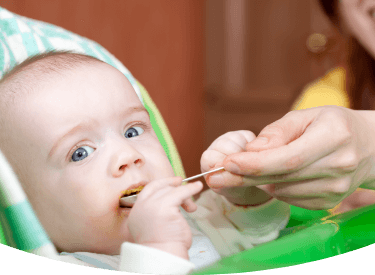
The stomach capacity of a 5-month-old baby is 180-210 ml. It should be breastfed 4-6 times a day. If your baby cannot take breast milk for various reasons, if you are supplementing with formula, "How much formula does a 5-month-old baby drink?" The person who will answer the question is your doctor, who monitors your baby`s development.

Solid foods will get its interest. It may even try to take something from your plate while you are eating and smack its mouth. It`s slowly starting to signal the transition to solid food. However, only breast milk or formula should be fed for the first 6 months.

Sleep

During this period, babies sleep an average of 14.5 hours a day. They sleep for about 10 hours a night; we can say that 7 hours of it is uninterrupted. Your baby`s daytime feedings are very important, as nighttime awakenings for feedings are over. Thus, your baby will wake up when it is hungry and will have a deep and comfortable sleep.

Every baby is unique. If your baby still wakes up frequently, you should first check whether the necessary conditions for a comfortable sleep are met. If you can say yes to these, you are on the right track. The ambient temperature is suitable, the clothes are comfortable, the bed is comfortable, the stomach is full, it is fed enough during the day, its clothes are clean, it has no physical discomfort, it is satisfied with the games and its parents during the day, it has enough sleep during the day, it is not overly tired, not overstimulated and so on.

If all of them are yes, it probably wakes up out of habit and because it doesn`t know how to fall asleep again, that is, because of its addiction to the sleep support you gave it. Here the choice is yours! A sleep training method chosen for you and your baby without crying or continue to make it sleep with support.

Care Tips

  1. Your little one will begin to interact with other people and babies. Safety and hygiene must be under your control at all times.
  1. When your baby is upset, it needs you to respond quickly and help it calm down. You don`t spoil it. You develop strong emotional regulation skills.
  1. Your baby will begin to make its own choices. At this stage, you should stay calm and learn to be patient with it.
  1. It is recommended that you breastfeed your baby exclusively for the first six months. Only start solid food and formula supplementation if recommended by a pediatrician.
  1. If your baby is experiencing symptoms such as itchy gums, increased salivation, mild fever, diarrhea, restlessness, raising the hands to the ears, it means that your little one has teething problems. If the itching has started, you will need tether toys.
  1. If your baby is teething its first tooth, you can celebrate tooth wheat too! The purpose of this tradition is for the baby to have straight and strong teeth like wheat. Be prepared for this celebration from the 5th month. Because babies can get their first teeth at 6 and 7 months.

Tests and Vaccines

If previous vaccinations and tests have been completed, there is no special routine for this week. Many doctors have not recommended routine checkups this month, but call your doctor if you have a problem that can`t wait until next month.

Plays and Activities

These days, you`d be surprised how creative and fun your baby really is. Put a toy in its hand, then pass the same toy to the other hand. If you show the transition from one hand to the other a few times, over time you can see that it is doing this move itself. You can stand it by holding it under its arms. While doing this movement, it will learn to relax its legs, which it kept tense at first, over time. While playing on the play mat, you can put some toys a little far away so that it can reach them.

You can get baby books. You should start reading to it, even same one every day. Felt books can also be a good idea to develop your baby`s sense of touch. A 5-month-old baby is at the point where it can react to its own reflection. By holding a mirror, you can make it see itself, so you can have fun.

When to Apply to The Doctor?

All babies tend to get sick faster than adults because their bodies are still developing, and they tend to fall, hit something. Some of the things to watch out for are allergic reactions. Your baby may be allergic to something that none of your family members are allergic to. You should take your baby to a pediatrician immediately if you see any of these symptoms: fever, skin rash/skin allergies, diarrhea, infections, breathing problem.

Common Cold Tips

It is estimated that children can catch up to eight colds a year. Viruses are spread through airborne droplets and by touching contaminated objects such as doorknobs and toys. Your baby cannot fight them as easily as you do because its immune system is less developed.

On top of that, your baby constantly puts its fingers near its eyes and in its mouth, giving viruses lurking on its hands an easy passage into its body where they can camp.

Common symptoms of the common cold include sneezing, watery eyes, congestion, cough, runny nose, restlessness, and low-grade fever. These symptoms usually last for a week.

For your baby not knowing how to breathe through its mouth, a blocked nose is unhappiness. To help your baby feel more comfortable, open a stuffy nose with a nasal aspirator and use a cool vaporizer or air humidifier in the room where it sleeps. These steps help keep its mucus thin and mobile so it can breathe easier. You can try to feed it less and more often, as it may be more difficult for it to breathe easily while eating.

Doctors do not recommend cough and cold medicines for children younger than 6 years of age because they have not been proven to be helpful and can have serious side effects. Antibiotics don`t help either, as most colds are caused by viruses. Your baby`s body must fight the infection on its own. If the cold is accompanied by a fever, your baby`s doctor may recommend acetaminophen. So what else can you do?:

  1. If you are breastfeeding your baby, continue to breastfeed during its illness. In fact, breastfeed a lot, this will make it faster and easier to get through.
  1. Fluids are of great importance in preventing dehydration. Breastfeed more often.
  1. If the runny nose is thick, you can use saline nasal drops or saline nasal spray. Drop or squeeze into both nostrils 15-20 minutes before feeding time.
  1. Nasal cleaning in babies is beneficial in case of a cold. You can empty your baby`s nose by gently pulling with a rubber bulb-shaped syringe or a nasal aspirator.
  1. Check your baby`s runny nose. Yellow discharge may indicate secondary inflammation, and clear discharge may indicate hay fever.
  1. It may cause loss of appetite. Feed your baby small amounts often.
  1. Ventilate your baby`s room frequently and keep it moist.
  1. You can raise the head of its bed to ease its breathing.
  1. Wash your baby`s hands frequently.
  1. Frequently disinfect the toys, supplies and bedding it uses.
  1. Change your baby`s clothes frequently during illness.
  1. You can place an onion by dividing it in half, without peeling it, near your baby`s head/nose. This is a natural treatment support recommended by doctors.
  1. Keep your baby away from sick people. Even if they are its sibling or friends.
  1. Always wash your own hands before feeding it or doing anything to care for your baby.

20-Week-Old Baby: Development Week by Week

This is when your baby adapts to the patterns and routines around you. It was 20 weeks ago, you gave birth to this little bundle of joy and now you watch it laugh, play, cry and even tease you. This week is a big milestone for you and your baby. Make sure you protect your baby, but also give it space to play and have fun. Get involved in its activities and enjoy your time together. While you are playing games, don’t have any question in your mind about how to sleep it at the next bedtime, leave yourself to your baby, remember that the baby is blessing for people!

Baby Development

Many 5-month-old babies gain 450-650 grams or slightly more at this stage. Length and head circumference also increase by 1.25 cm. If you are concerned about your baby being underweight or overweight, you can go to a pediatrician who can help you find an appropriate solution for your baby.

Your baby may be able to straighten up to sit up on its own this month. The 5th month is the right time for your baby to do sitting exercises. Do not forget to put support pillows next to it when it takes a sitting position, as its musculature is still not fully developed.

Gross motor features of babies, that is, reaching for something, sitting, turning, moving their body, are the features that should be followed closely for the first 6 months of development. To develop these, you need to let your baby spend some time by laying it on the tummy. You can get support from game carpets for this. You should place your baby safely on your stomach. This way you will make the baby move against gravity. It will learn to use its entire muscle structure.

Milestones

  1. Your baby can now move toys around and push anything within reach. This is a huge step in its life.
  1. Shows behavior changes you`ve never seen before. Your baby will like something today but will forget it completely tomorrow.
  1. Sometimes your baby may teethe at this stage.
  1. Your baby can now turn from back to tummy and tummy to back very easily, and it does this often.
  1. Can now sit up and support itself with its hands.
  1. Can now find sounds, turn its head to check where the sound is coming from.
  1. Is interested in movement and enjoys watching it.
  1. Can roll from place to place.
  1. This month, your baby may scream very joyfully.
  1. Can grab the rattle with its fingertips.
  1. Can understand when you say its name.
  1. May make loud noises to attract attention.
  1. Can separate you, its father and family members whom it sees very often from strangers.
  1. Its feet and toes draw its attention. It especially likes to hold them while lying on its back.
  1. May cry when attention is not on it, or when something in its hand is taken.
  1. May stop crying when spoken to it calmly.
  1. Can put the object in its hand down just because it likes the sound it makes and crown the result with chuckles.
  1. Can pay attention to objects as small as a grape.
  1. Your baby may also be able to sit unaided.

Nutrition

The stomach capacity of a 5-month-old baby is 180-210 ml. It should be breastfed 4-6 times a day. If your baby cannot take breast milk for various reasons, if you are supplementing with formula, "How much formula does a 5-month-old baby drink?" The person who will answer the question is your doctor, who monitors your baby`s development.

Solid foods will get its interest. It may even try to take something from your plate while you are eating and smack its mouth. It`s slowly starting to signal the transition to solid food. However, only breast milk or formula should be fed for the first 6 months.

Sleep

During this period, babies sleep an average of 14.5 hours a day. They sleep for about 10 hours a night; we can say that 7 hours of it is uninterrupted. Your baby`s daytime feedings are very important, as nighttime awakenings for feedings are over. Thus, your baby will wake up when it is hungry and will have a deep and comfortable sleep.

Every baby is unique. If your baby still wakes up frequently, you should first check whether the necessary conditions for a comfortable sleep are met. If you can say yes to these, you are on the right track. The ambient temperature is suitable, the clothes are comfortable, the bed is comfortable, the stomach is full, it is fed enough during the day, its clothes are clean, it has no physical discomfort, it is satisfied with the games and its parents during the day, it has enough sleep during the day, it is not overly tired, not overstimulated and so on.

If all of them are yes, it probably wakes up out of habit and because it doesn`t know how to fall asleep again, that is, because of its addiction to the sleep support you gave it. Here the choice is yours! A sleep training method chosen for you and your baby without crying or continue to make it sleep with support.

Care Tips

  1. Your little one will begin to interact with other people and babies. Safety and hygiene must be under your control at all times.
  1. When your baby is upset, it needs you to respond quickly and help it calm down. You don`t spoil it. You develop strong emotional regulation skills.
  1. Your baby will begin to make its own choices. At this stage, you should stay calm and learn to be patient with it.
  1. It is recommended that you breastfeed your baby exclusively for the first six months. Only start solid food and formula supplementation if recommended by a pediatrician.
  1. If your baby is experiencing symptoms such as itchy gums, increased salivation, mild fever, diarrhea, restlessness, raising the hands to the ears, it means that your little one has teething problems. If the itching has started, you will need tether toys.
  1. If your baby is teething its first tooth, you can celebrate tooth wheat too! The purpose of this tradition is for the baby to have straight and strong teeth like wheat. Be prepared for this celebration from the 5th month. Because babies can get their first teeth at 6 and 7 months.

Tests and Vaccines

If previous vaccinations and tests have been completed, there is no special routine for this week. Many doctors have not recommended routine checkups this month, but call your doctor if you have a problem that can`t wait until next month.

Plays and Activities

These days, you`d be surprised how creative and fun your baby really is. Put a toy in its hand, then pass the same toy to the other hand. If you show the transition from one hand to the other a few times, over time you can see that it is doing this move itself. You can stand it by holding it under its arms. While doing this movement, it will learn to relax its legs, which it kept tense at first, over time. While playing on the play mat, you can put some toys a little far away so that it can reach them.

You can get baby books. You should start reading to it, even same one every day. Felt books can also be a good idea to develop your baby`s sense of touch. A 5-month-old baby is at the point where it can react to its own reflection. By holding a mirror, you can make it see itself, so you can have fun.

When to Apply to The Doctor?

All babies tend to get sick faster than adults because their bodies are still developing, and they tend to fall, hit something. Some of the things to watch out for are allergic reactions. Your baby may be allergic to something that none of your family members are allergic to. You should take your baby to a pediatrician immediately if you see any of these symptoms: fever, skin rash/skin allergies, diarrhea, infections, breathing problem.

Common Cold Tips

It is estimated that children can catch up to eight colds a year. Viruses are spread through airborne droplets and by touching contaminated objects such as doorknobs and toys. Your baby cannot fight them as easily as you do because its immune system is less developed.

On top of that, your baby constantly puts its fingers near its eyes and in its mouth, giving viruses lurking on its hands an easy passage into its body where they can camp.

Common symptoms of the common cold include sneezing, watery eyes, congestion, cough, runny nose, restlessness, and low-grade fever. These symptoms usually last for a week.

For your baby not knowing how to breathe through its mouth, a blocked nose is unhappiness. To help your baby feel more comfortable, open a stuffy nose with a nasal aspirator and use a cool vaporizer or air humidifier in the room where it sleeps. These steps help keep its mucus thin and mobile so it can breathe easier. You can try to feed it less and more often, as it may be more difficult for it to breathe easily while eating.

Doctors do not recommend cough and cold medicines for children younger than 6 years of age because they have not been proven to be helpful and can have serious side effects. Antibiotics don`t help either, as most colds are caused by viruses. Your baby`s body must fight the infection on its own. If the cold is accompanied by a fever, your baby`s doctor may recommend acetaminophen. So what else can you do?:

  1. If you are breastfeeding your baby, continue to breastfeed during its illness. In fact, breastfeed a lot, this will make it faster and easier to get through.
  1. Fluids are of great importance in preventing dehydration. Breastfeed more often.
  1. If the runny nose is thick, you can use saline nasal drops or saline nasal spray. Drop or squeeze into both nostrils 15-20 minutes before feeding time.
  1. Nasal cleaning in babies is beneficial in case of a cold. You can empty your baby`s nose by gently pulling with a rubber bulb-shaped syringe or a nasal aspirator.
  1. Check your baby`s runny nose. Yellow discharge may indicate secondary inflammation, and clear discharge may indicate hay fever.
  1. It may cause loss of appetite. Feed your baby small amounts often.
  1. Ventilate your baby`s room frequently and keep it moist.
  1. You can raise the head of its bed to ease its breathing.
  1. Wash your baby`s hands frequently.
  1. Frequently disinfect the toys, supplies and bedding it uses.
  1. Change your baby`s clothes frequently during illness.
  1. You can place an onion by dividing it in half, without peeling it, near your baby`s head/nose. This is a natural treatment support recommended by doctors.
  1. Keep your baby away from sick people. Even if they are its sibling or friends.
  1. Always wash your own hands before feeding it or doing anything to care for your baby.