


Your baby will likely be a little explorer at this age; We recommend that you follow it closely and let it discover. Be on its side and let it grow into an independent, confident child.
Baby Development

It is very common for a baby to experience growth spurts around week 37. By this week, your baby will begin to remember more specific information such as where its toys are in your house. It will also be able to imitate actions it saw a week ago. These skills indicate that it remembers its memory, yet it does not remember most of its experiences. The long-term conscious memory of certain events will not develop until your baby`s second or third year, when true language skills emerge.
Your baby can now put and remove objects from a container. Give it a plastic bucket and colored blocks so it can practice this new skill. It also likes toys with moving parts, such as keys, levers, or doors that open and close. Large plastic cars that your baby can ride on the floor are also fun toys.
Your increasingly assertive baby may object if you buy a toy from it. It really began to make its needs and desires known. Sound advice: Before you take an object away from it, give it something new.
About half of babies this age will initiate games of giving objects and then taking them back. Be its playmate. Try rolling a ball at your baby and see if it bounces back to you. Give it a sorting toy or stacking rings and see if it separates and stacks the pieces. It also enjoys sharing its food, so accept these "gifts" graciously.
Milestones
- Your baby can understand the sounds of people it knows.
- Can understand object persistence, which means it can remember a toy or an object and try to find it.
- Can recognize people it sees regularly.
- Your baby`s vision is fully developed and can now focus and see things from any distance.
- Can start crawling this week. However, some babies may take a little longer to crawl or not crawl at all. Some babies also start walking at this age. So every baby is different!
- Can stand on its own by holding a chair, sofa or other support.
- Your baby may begin the pincer grasp, which means it will begin to use its index finger and thumb to grasp things. This grip is important as it will help your baby hold things like a sippy cup or toys.
- By this time, your baby can sit longer.
- Its vocabulary increases and can now say words such as grandfather, mother, father.
Nutrition
At this age, it may become more independent and may want to hold its bottle or glass by itself. It needs around 700 to 900 calories a day, and half of those calories should be from breast milk or formula, which means your baby may need about 700 milliliters of milk daily. This may be the right age for your baby to transition from bottle to cup. While it`s normal to be resistant at first, you can start with a glass of water and gradually replace it with milk. Also, at this stage you should give food first, followed by breast milk or formula. Three meals a day and two small snacks should be taken. Check wet and poopy diapers and weight to determine if your baby is feeding well.
Sleep
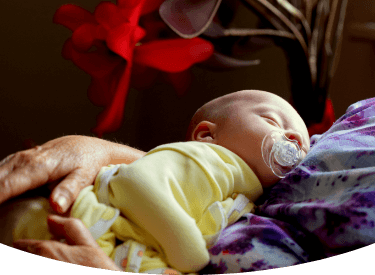
A baby`s sleep pattern worries parent the most. Your baby may sleep 12-14 hours a day during these times. This is split into two parts, about 10 to 12 hours of night sleep and one or two daytime naps of 1 to 2 hours each. It is seen that most babies sleep up to 8-12 hours at night without interruption until this age. It may not be able to sleep peacefully if it is disturbed by growth spurts or teething problems. However, if your baby`s sleep times are much lower than these averages, you may plan to sleep training. Although the need for sleep is different as every baby grows, very problematic and short-term sleep affects its growth negatively. If you haven`t done it yet, massage, hug, bath, lullaby, etc. You can start training by creating a sleep routine that includes actions. It`s okay if your baby has temporary sleep problems, it`ll get over it soon.
Care Tips
- Parenting methods are very personal and what works for you may not work for someone else. You don`t have to adopt a school, either. Only with your own knowledge and instincts, you can develop a method unique to you and your baby. However, while doing this, you can never think that `I’m its mother, so I can do everything whatever I want`. It is a separate individual. All your choices should be in line with its emotional, social, cognitive and physical healthy development.
- You should brush your baby`s teeth every day. Now you can teach it to spit, too.
- Keep smaller objects out of its reach, as babies have a habit of putting everything in their mouth.
- Keep all kinds of drugs and chemicals off limits.
- If you have stairs at home, secure that area as well by placing doors.
- You can buy toys of different sizes and stack them together. In this way, it can perceive the concepts of large and small. You can demonstrate hitting non-breakable toys with each other.
- You can show all its limbs by saying their names. For example, “This is your nose, this is my nose.” You can make it easier to understand by showing both its and your limbs.
- You can play a game of give and take with your baby.
Tests and Vaccines
A healthy baby is a happy baby, so you should never miss an appointment with your baby`s pediatrician. At your visit, your doctor can check your baby`s weight and height and perform a physical exam to determine if your little one is showing the expected physical progress. Your doctor may recommend a blood test to detect any signs of anemia in your baby.
Plays and Activities
You can hide a squeaky toy under a blanket or behind you and let your baby search for it. This improves object persistence in it.
You can play peekaboo or hide-and-seek with your baby. Hide behind a curtain or door and let your baby find you.
Give a box full of toys of various shapes, sizes and textures. Let your baby explore the contents of the box.
Take a big ball, roll it towards your baby and ask your baby to roll it towards you.
When to Apply to The Doctor?
Some issues that may cause concern in parents and require a doctor`s consultation include:
- If your baby is unable to sit
- Does not put pressure or weight on the legs when standing up
- Does not say words such as father, grandfather, mother at all
- Does not respond when you call its name
- Does not recognize objects or people that it sees constantly
- Can`t hold any object.