


Your baby may be standing up, holding on to furniture and moving around with the help of furniture. All good progress towards walking! Your little one is also working hard at talking and a storm may be babbling. Respond to your baby using adult words and try pointing and naming objects.
Baby Development
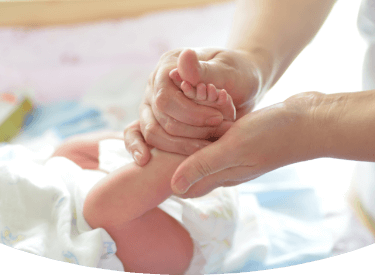
At week 40, you will see an improvement in your baby`s personality. It can be quite sociable, smile at everyone or be shy, hiding its face when someone new comes along and tries to relate to it. It will make gestures to get your attention or even say goodbye when you say you`re going out. This is the age at which your baby can stand on its own.
Milestones
- Your baby will be able to roll back a ball you rolled towards it.
- Will be able to stand alone for a short time.
- May say `mom` or `dad`.
- Will say one or two more words besides `mom` or `dad`.
- Will be able to pick up small objects between index finger and thumb.
- Will be able to drink from a glass by itself.
- May respond with hand gestures such as “give it to me” by reaching out to an object.
- Will learn how to sit while standing. It brain will calculate how to do squats to slowly get up and sit down.
- Can stand up by holding on to you or something this month.
- Can resist when you try to take its toy.
- Can get into a sitting position while weltering, and can stand up from a sitting position.
- Can stand for a moment, walk holding on to things.
- Can show its wishes without crying and by pointing.
- Can lift small objects using thumb and other fingers.
- Can wave or clap.
- Can start walking by holding on to a place.
- Can start the “peekaboo” game by itself.
- Can understand the word “no” but may not obey it every time no is said.
- Can willingly let go of an object.
Nutrition
40 weeks is a good time for your baby to start drinking from a cup. Learning to drink from a cup will be very helpful in preparing your baby for weaning if you plan to wean it from breastfeeding or bottle. Encourage your baby to drink a glass of water with every meal. Keep a sippy cup around your baby all day so it can drink water whenever it wants.
Don`t insist that it finish everything. Whenever possible, feed your baby in a highchair, away from distractions like the TV. Consider adding some fun to your meal with spoon feeding sound effects. Or chat about what snacks it chews and how many pieces are left in its tray.
You don`t have to make special meals for your baby. You can give it food from the rest of the family, provided you cut or crush the food into small, safe pieces and it`s not on the list of foods that may be unsafe for babies. Also avoid giving it anything very hot as it can burn its mouth. That way it can grow to love all kinds of flavors and will probably be very interested in the food you eat if you enjoy it!
Sleep

The top four teeth will grow under the gums and cause discomfort. In addition to the mental and mobility development it will experience, this pain may be enough to disrupt its sleep. When it doesn`t sleep well at night, it can be cranky and glued during the day. Eating solid food or sucking on milk can hurt because of swollen gums. It will be relieved after its teeth come out. In such processes, it can expect more sleep and lap support.
Care Tips
- Most babies take their first steps at 9 to 12 months and walk well by 14 or 15 months.
- Babies cope with separation anxiety at this age. Never sneak out. Let it see you go, do your goodbye routine and say you`ll be back.
- For times when you want to carry your baby on the move, buy a good carrier that distributes your baby`s weight evenly and does not strain your neck or back. Look for one with wide, padded straps.
- When you lift your baby, always start by bending your knees and squatting instead of bending at the waist.
- If a babysitter is taking care of your baby, make sure that person gets it enough play and activities.
- If your baby is looking at something, look, show and describe it. This will teach it to ask “what is this” about something knowing that you will give it the answer.
- At week 40, it`s common for babies to wake up suddenly and pull themselves up to get around the bassinet, standing on the edge of the bed. Lay your baby down gently, pat its back, and encourage it to go back to sleep.
- If your baby isn`t getting a good night`s sleep due to teething discomfort or extra energy, put it on a long daytime nap the next day.
- Encourage your baby to test its physical abilities by giving it plenty of room to walk and move around.
- Babies are prone to falling or bumping when they try to walk, so always have a first aid kit with you.
- Never interfere with whichever hand it uses. It doesn`t matter if it`s right-handed or left-handed. Baby should decide which hand to use.
Tests and Activities
There is no special health routine this week.
Plays and Activities
- As the baby`s dexterity develops, it can enjoy toys with multiple functions such as pressing the button, opening the drawer, lifting the lid and making a sound.
- It finds it fun to make and break toys that are stacked and intertwined. You can also choose wooden puzzles.
- It loves the games you play with the toys that go back and forth between you in its 10th month. Give it a ball and tell it to send it to you.
- Funny songs accompanied by hand gestures can give your baby great pleasure. Not only will you make it laugh, you will also contribute to the development of its eye-hand coordination and fine motor skills. Songs like "Five Little Monkeys Jumping on the Bed" and "Are You Sleeping?" never go out of style.
- Now you can buy a coloring book for your baby, as it can do activities such as scribbling and painting thanks to its developing finger muscles.
When to Apply to The Doctor?
During sleep, a baby with sleep apnea may snore loudly, gasp or cough; has difficulty in breathing or long pauses between breaths; may appear restless or sweat profusely. Snoring itself does not necessarily indicate a problem. A baby with apnea may wake up many times during the night and appear sleepless during the day. Related health issues include problems with the tonsils or adenoids and the inability to gain weight. Talk to your baby`s doctor right away if you experience this, as untreated sleep apnea can lead to cardiovascular complications and problems with learning and behavior.