


Congratulations, you made it! Your baby is on the verge of toddlerhood. If your baby isn`t walking yet, it`s likely to take its first independent steps soon (Don`t worry if it doesn`t, some babies are 15 months old before they even start walking).
Baby Development

You can encourage your baby to walk by standing in front of it or kneeling and stretching out your hands. Or take both hands and walk towards you. Like most babies, your baby takes these early steps with arms out to the side (for balance) and elbows bent, belly forward while feet pointing out and bottoms back (for balance).
A storm will likely be babbling at this point, though its vocabulary will likely consist of only a few words besides "mom" and "dad". It may not be saying the actual words, but if you listen carefully, you`ll notice that its speech follows a pattern, as if it were a flowing speech that made sense, replaced with real words. For example, its emphasis and intonation may change depending on whether it is saying a sentence or asking a question. This means it`s grasped the basic concept of speech and it`s only a matter of time before it starts putting words together. When talking to you solemnly about something meaningless, make sure you respond as if you understand like `Really? And what happened next?`... If you keep doing this, you`ll soon hear a real word or two in the middle of its chatter.
Your baby can respond to simple questions and commands, especially if you give it some cues with hand gestures. For example, "Where is your mouth?" ask. And point it out. Or say "give me the glass" and point to the object. It may even answer you in its own way, using gestures such as nodding "no".
Now is the time to help your baby make connections between objects and their names – the more you do, the faster your baby`s vocabulary will grow.
Keep talking to your baby and labeling things. Count as you climb the stairs, name and color the fruits and vegetables at the grocery store. Read a picture book to your baby and ask it to point out or name familiar objects.
Ask for its opinion once in a while: Ask it if it wants to wear the red or blue socks, play with its blocks or stacking rings.
Milestones
- Your baby will be able to stand up independently
- Drink from a glass by itself
- Say two or three different words besides "mama" or "daddy".
- Roll back a ball that rolled to it.
- Respond to a one-step instruction such as “give me that ball”.
- Start walking on its own.
- Pick up small toys and food items by pinching them between its thumb and forefinger.
- Send you flying kisses.
Nutrition
Use wide or flat plates instead of tall bowls to make it easier for your baby to take food. Let your baby use forks, spoons and knives. Choose ones with large handles that will be easier to hold.
Sleep
Its gums will swell, especially where the first four teeth will erupt, which can cause it discomfort and make it difficult to fall asleep. At times like these, your baby will need extra love and attention. Breastfeeding, patting, gentle rocking, and other soothing techniques can help your baby sleep.
The ideal sleep patterns and hours from the 12th to the 18th months are as follows: Number of daytime naps 1-2, Daytime naps duration 1-2 hours, Time to stay awake between day naps 3-4 hours, Nighttime sleep time 19.00-20.00, Night sleep duration 10-12 hours, Total daily sleep time 12-14 hours.
Care Tips
- A great way to get support and reduce stress in being a good parent is to join a mom group or dads group. You are likely to find others out there with similar doubts and concerns. It will support you in every way.
- Every baby has a speed at which it starts walking. Your baby may be taking a few steps by now or may still be content to crawl. Do not worry; it will acquire motor skills at its own pace. Make sure your camera is always ready to take a picture!
- You may feel bad separating your baby from something it loves very much, but experts say now is a good time to start weaning it from its pacifier. The longer it uses a pacifier, the harder it may be to let go. However, the most important reason is that it slows down speech initiative and development. Quit gradually: Limit daytime use first, and then get your baby used to not using it at night. You can also try replacing the pacifier with a stuffed animal or toy that will be a sleeping companion.
- Do not leave your baby alone or with other children.
- Encourage walking by standing in front of it and holding out your hands so it can take steps with your support.
- Babies at this age absorb everything they hear and imitate their parents. That`s why you should keep away from any bad behavior, a bad word, shouting, bad image, etc.
- Do not use the word “no” too much. Save your "no"s for something really dangerous your baby might try to do, like touching electrical outlets or going near stairs.
- If your baby resists spoon feeding, give it the spoon to hold. This will help it practice getting food into its mouth on its own. It even makes it enjoy eating.
- Try joining a playgroup with your baby to help it get used to playing with other babies and burn off excess energy.
Tests and Vaccines
If you have had previous vaccinations and controls, there is no special routine for this week.
Plays and Activities
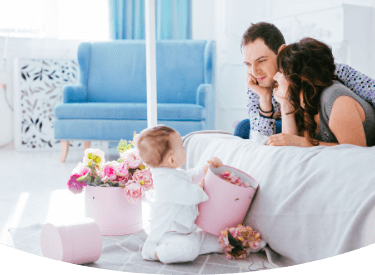
If your baby is walking or crawling, imitate its movement and try racing against it in a room. This can help it develop its motor skills and concepts of distance and speed.
Your baby probably thinks it`s fun to push, throw and knock everything down. It likes games where it can put things in containers and throw them out again. This can be with blocks in buckets or boxes and pots and pans that it can nestle in. It will also be excited by the loud sound of pots and pans hitting each other.
When to Apply to The Doctor?
Some situations in your 48-week-old baby`s development when you should consult a doctor:
- If your baby shows a mild fever and itchy red patches on its body that turn into brown crusts, consult your doctor right away as it may have chickenpox.
- Consult your doctor if you see that it is exhibiting an allergic reaction to any food or anything in the house, such as runny nose, watery eyes, fever and redness.