

Get our app

Download on the App Store

33 Weeks Pregnant: Baby Development and Symptoms

Congratulations! You are 33 weeks pregnant and will soon welcome your little one in your life and at home. The wait is almost over - a few more weeks of dieting, medical appointments, and struggling with unpleasant changes in your body. You are in the third trimester of your pregnancy and this is the time when you should prepare for the birth of your baby. But your little one is still thriving. This study will tell you everything you need to know about your baby`s growth at week 33 and the changes you should expect in your body during this time.

Baby Growth

This is the final stage of your baby`s development. Its organs, bones and muscles are fully formed and with a few `final touches` it will be ready. The remaining nails and hair should be fully formed by now. Your baby`s nutritional and oxygen needs will be met by the placenta. However, the baby will use its breathing abilities by drinking the amniotic fluid.

The baby`s brain is developing faster than ever before, forming more and more connections between neurons. Your baby has the ability to tell the difference between day and night by synchronizing its sleep-wake cycle with your own. Its immunity is stronger than ever, it receives protective antibodies from your blood through the placenta.

Baby Size

At the 33rd week, your baby should be the size of a watermelon and measure 43.7 cm from head to toe. With a weight of about 1918 grams, apart from the skull, which remains flexible so that it can safely move through the birth canal, its bones are strengthened while the skin wrinkles are filled with baby oil. Since there is no space in the uterus, there will be less of a kick than usual, but you should still feel it writhing around.

Common Body Changes

You will experience a few new body changes during pregnancy at 33rd weeks.

  1. Hemorrhoids: Hemorrhoids can be due to perineal, anal, rectal bleeding or, in rare cases, a tear in the anal tissue. Ask your physiotherapist to perform a perineal massage. Your doctor may even prescribe some oral or topical medications to deal with pain.
  1. Varicose veins: The increased pressure of your enlarged uterus in the lower body can cause the leg veins to enlarge and start throbbing. These are known as varicose veins. If they turn red and become hard, you may have a clot and need emergency medical attention.
  1. Nipple discharge: Your nipples produce a yellowish liquid called colostrum, which is used to feed the baby for the first few days. Your nipples will leak colostrum during this week in preparation for your baby. Using absorbent pads inside your bra will prevent stains from appearing.
  1. Insomnia: With the combination of all these symptoms, you will not be able to sleep much. Try not to exercise or eat too close to bedtime. Meditation and massages also help.

Pregnancy Signs

Week 33 is going to be pretty tough. However, being aware of any pain or discomfort and knowing the remedies for them will help you get over them quickly.

  1. Difficulty in breathing: A swollen uterus does not allow your lungs to expand enough to take in as much air as you want. Avoid strenuous activities such as running, lifting weights, climbing with weights.
  1. Clumsiness: Your increased mass will affect your sense of balance and make you more clumsy than before. Wear comfortable shoes with flat soles so you can maintain at least some of your balance at home.
  1. Increased metabolic rate: Your body will start to overheat as you try to keep up with your increased energy needs. The only side effect is hot skin and it will disappear sooner or later.
  1. Headache: Lack of hydration can make you dizzy and throbbing. Drink at least 3 liters of water a day, even if it means running to the bathroom every twenty minutes.
  1. Pain or uterine dilation: You may experience uterine dilation at the 33rd week of pregnancy. Opening can begin hours, days, or weeks before the onset of labor. The cervix may not open at all before labor. This process is different for every woman. During the opening, you may feel a severe and stabbing pain in the vagina. But having pain at the 33rd week of pregnancy does not necessarily mean that the birth has started. It`s not harmful to you or your baby. Vaginal pain in late pregnancy is usually nothing to worry about, but if it causes too much discomfort, it`s a good idea to let your doctor know. It`s also natural to feel uterine contractions at 33-week pregnancy. If you feel both cramping and your uterus contracting and hardening, pay attention to how often it happens. True labor comes at intervals of 5 minutes and recurs at regular intervals.
  1. Decreased water: Generally, in the last period of the third trimester, the amount of amniotic fluid that surrounds and protects the baby may be insufficient. Often times, this is simply due to fluid leaking out or puncturing the amniotic sac. Rarely, low amniotic fluid level may also suggest a problem such as fetal growth retardation, kidney or urinary tract disease. If there is a decrease in your water, you cannot understand it by itself, it is detected in ultrasound. If such a diagnosis is made, you need to rest and the amount of amniotic fluid is closely monitored. Your doctor may want to intervene if it goes down to a level that threatens your baby.
  1. Early detachment of the placenta (detachment!): It is the separation of the placenta from the uterine wall early during pregnancy, not after delivery. If the separation is mild, there is usually not much danger to the mother or baby if prompt treatment and necessary precautions are taken. However, if the separation is serious, the risk for the baby may be high. This is because the complete separation of the placenta from the uterine wall means that the baby will not be able to get oxygen and nutrients. Premature separation of the placenta is usually seen in the second half of pregnancy, most often in the third trimester. That`s why you should call your doctor right away if you experience bleeding along with abdominal pain in the second half of pregnancy.

Abdomen
awsUrlImagetracker/gobek33.jpg

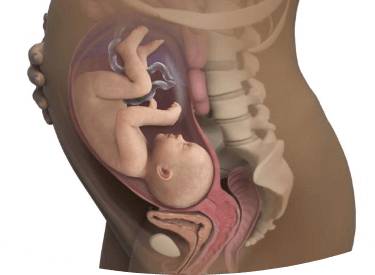
This week you will probably weigh 10-15 kg more than usual, more if you are carrying twins. The distance from the womb to the apex this week is about 33 cm when measured from the pubic symphysis and about 13 cm when measured from the navel, so keep ointments on hand for cracked or dry skin. Polyhydramnios, a condition caused by an increase in amniotic fluid volume, usually occurs around these times. Therefore, if your weight has increased more than normal, consult your doctor.

Ultrasound

An ultrasound this week will show that your baby may open and close its eyes depending on whether it is awake or not. You will see that your baby`s bones are getting stronger, as well as fully developed organ systems. If you have risk factors that could lead to complications, you may want to consider creating a biophysical profile with your ultrasound.

The ultrasound scan will show:

  1. Baby`s physical shape and weight. The doctor will test for any problems with mobility, especially in the limbs.
  1. The volume of amniotic fluid, in higher or lower amounts, can create a problematic pregnancy that can result in preterm delivery or stillbirth.
  1. Fetal breathing movements are tested to ensure they are regular and normal.

What to Eat?

Your 33-week pregnancy meal should include a balanced diet of fresh fruit, vegetables, lean poultry, eggs, dairy products and whole grains.

  1. Consuming foods rich in Omega-3 fatty acids, such as docosahexaenoic acid, can help your baby`s neural development.
  1. Studies have shown that mothers who consume fish and flaxseed oil have children who score above average on standardized tests. However, avoid fish that are contaminated with mercury, such as shark, swordfish, tuna, and mackerel.
  1. Flaxseed is also an option for those who prefer a vegetarian source.
  1. If your diet is lacking due to budget, time or availability, ask your doctor for prenatal supplements.
  1. Avoid alcohol of any kind, as researches have proven that each type has a detrimental effect on pregnancies.

Tips and Care

Here are a few things to keep in mind and not to do during this time.

  1. You can try different positions you can take during birth. Some of these include getting down on your hands and knees, lying down, squatting, or using a delivery chair. When contractions occur, find the position that feels most comfortable to you to ease your labor path.
  1. Hemorrhoids can cause a lot of pain and embarrassment, but staying hydrated and eating enough fiber can relieve symptoms.

Don’ts

  1. Do not ignore any changes in your baby`s movements. If it stops or slows its kicking and pushing movements, let your doctor know right away so tests can be done to detect the problem.
  1. Varicose veins are a common symptom of your second and third trimesters. Relaxing them takes some effort, so do regular exercise like jogging and swimming. Avoid staying in the same position for too long, even while sitting or lying down.

Shopping

Breast pumps and bottles are a postpartum need. It may also be good to buy some maternity clothes, diapers, baby clothes, and a bassinet. Don`t forget to invest in a pram to get your baby moving when you`re too tired to carry it.

You are very close to giving birth at the 33rd week. It`s best to stock up on necessary supplies to avoid rushing when the baby is born. Take care of yourself, your baby will develop well. If you notice anything unusual, contact your doctor. It is able to guide you better!

33 Weeks Pregnant: Baby Development and Symptoms

Congratulations! You are 33 weeks pregnant and will soon welcome your little one in your life and at home. The wait is almost over - a few more weeks of dieting, medical appointments, and struggling with unpleasant changes in your body. You are in the third trimester of your pregnancy and this is the time when you should prepare for the birth of your baby. But your little one is still thriving. This study will tell you everything you need to know about your baby`s growth at week 33 and the changes you should expect in your body during this time.

Baby Growth

This is the final stage of your baby`s development. Its organs, bones and muscles are fully formed and with a few `final touches` it will be ready. The remaining nails and hair should be fully formed by now. Your baby`s nutritional and oxygen needs will be met by the placenta. However, the baby will use its breathing abilities by drinking the amniotic fluid.

The baby`s brain is developing faster than ever before, forming more and more connections between neurons. Your baby has the ability to tell the difference between day and night by synchronizing its sleep-wake cycle with your own. Its immunity is stronger than ever, it receives protective antibodies from your blood through the placenta.

Baby Size

At the 33rd week, your baby should be the size of a watermelon and measure 43.7 cm from head to toe. With a weight of about 1918 grams, apart from the skull, which remains flexible so that it can safely move through the birth canal, its bones are strengthened while the skin wrinkles are filled with baby oil. Since there is no space in the uterus, there will be less of a kick than usual, but you should still feel it writhing around.

Common Body Changes

You will experience a few new body changes during pregnancy at 33rd weeks.

  1. Hemorrhoids: Hemorrhoids can be due to perineal, anal, rectal bleeding or, in rare cases, a tear in the anal tissue. Ask your physiotherapist to perform a perineal massage. Your doctor may even prescribe some oral or topical medications to deal with pain.
  1. Varicose veins: The increased pressure of your enlarged uterus in the lower body can cause the leg veins to enlarge and start throbbing. These are known as varicose veins. If they turn red and become hard, you may have a clot and need emergency medical attention.
  1. Nipple discharge: Your nipples produce a yellowish liquid called colostrum, which is used to feed the baby for the first few days. Your nipples will leak colostrum during this week in preparation for your baby. Using absorbent pads inside your bra will prevent stains from appearing.
  1. Insomnia: With the combination of all these symptoms, you will not be able to sleep much. Try not to exercise or eat too close to bedtime. Meditation and massages also help.

Pregnancy Signs

Week 33 is going to be pretty tough. However, being aware of any pain or discomfort and knowing the remedies for them will help you get over them quickly.

  1. Difficulty in breathing: A swollen uterus does not allow your lungs to expand enough to take in as much air as you want. Avoid strenuous activities such as running, lifting weights, climbing with weights.
  1. Clumsiness: Your increased mass will affect your sense of balance and make you more clumsy than before. Wear comfortable shoes with flat soles so you can maintain at least some of your balance at home.
  1. Increased metabolic rate: Your body will start to overheat as you try to keep up with your increased energy needs. The only side effect is hot skin and it will disappear sooner or later.
  1. Headache: Lack of hydration can make you dizzy and throbbing. Drink at least 3 liters of water a day, even if it means running to the bathroom every twenty minutes.
  1. Pain or uterine dilation: You may experience uterine dilation at the 33rd week of pregnancy. Opening can begin hours, days, or weeks before the onset of labor. The cervix may not open at all before labor. This process is different for every woman. During the opening, you may feel a severe and stabbing pain in the vagina. But having pain at the 33rd week of pregnancy does not necessarily mean that the birth has started. It`s not harmful to you or your baby. Vaginal pain in late pregnancy is usually nothing to worry about, but if it causes too much discomfort, it`s a good idea to let your doctor know. It`s also natural to feel uterine contractions at 33-week pregnancy. If you feel both cramping and your uterus contracting and hardening, pay attention to how often it happens. True labor comes at intervals of 5 minutes and recurs at regular intervals.
  1. Decreased water: Generally, in the last period of the third trimester, the amount of amniotic fluid that surrounds and protects the baby may be insufficient. Often times, this is simply due to fluid leaking out or puncturing the amniotic sac. Rarely, low amniotic fluid level may also suggest a problem such as fetal growth retardation, kidney or urinary tract disease. If there is a decrease in your water, you cannot understand it by itself, it is detected in ultrasound. If such a diagnosis is made, you need to rest and the amount of amniotic fluid is closely monitored. Your doctor may want to intervene if it goes down to a level that threatens your baby.
  1. Early detachment of the placenta (detachment!): It is the separation of the placenta from the uterine wall early during pregnancy, not after delivery. If the separation is mild, there is usually not much danger to the mother or baby if prompt treatment and necessary precautions are taken. However, if the separation is serious, the risk for the baby may be high. This is because the complete separation of the placenta from the uterine wall means that the baby will not be able to get oxygen and nutrients. Premature separation of the placenta is usually seen in the second half of pregnancy, most often in the third trimester. That`s why you should call your doctor right away if you experience bleeding along with abdominal pain in the second half of pregnancy.

Abdomen

awsUrlImagetracker/gobek33.jpg

This week you will probably weigh 10-15 kg more than usual, more if you are carrying twins. The distance from the womb to the apex this week is about 33 cm when measured from the pubic symphysis and about 13 cm when measured from the navel, so keep ointments on hand for cracked or dry skin. Polyhydramnios, a condition caused by an increase in amniotic fluid volume, usually occurs around these times. Therefore, if your weight has increased more than normal, consult your doctor.

Ultrasound

An ultrasound this week will show that your baby may open and close its eyes depending on whether it is awake or not. You will see that your baby`s bones are getting stronger, as well as fully developed organ systems. If you have risk factors that could lead to complications, you may want to consider creating a biophysical profile with your ultrasound.

The ultrasound scan will show:

  1. Baby`s physical shape and weight. The doctor will test for any problems with mobility, especially in the limbs.
  1. The volume of amniotic fluid, in higher or lower amounts, can create a problematic pregnancy that can result in preterm delivery or stillbirth.
  1. Fetal breathing movements are tested to ensure they are regular and normal.

What to Eat?

Your 33-week pregnancy meal should include a balanced diet of fresh fruit, vegetables, lean poultry, eggs, dairy products and whole grains.

  1. Consuming foods rich in Omega-3 fatty acids, such as docosahexaenoic acid, can help your baby`s neural development.
  1. Studies have shown that mothers who consume fish and flaxseed oil have children who score above average on standardized tests. However, avoid fish that are contaminated with mercury, such as shark, swordfish, tuna, and mackerel.
  1. Flaxseed is also an option for those who prefer a vegetarian source.
  1. If your diet is lacking due to budget, time or availability, ask your doctor for prenatal supplements.
  1. Avoid alcohol of any kind, as researches have proven that each type has a detrimental effect on pregnancies.

Tips and Care

Here are a few things to keep in mind and not to do during this time.

  1. You can try different positions you can take during birth. Some of these include getting down on your hands and knees, lying down, squatting, or using a delivery chair. When contractions occur, find the position that feels most comfortable to you to ease your labor path.
  1. Hemorrhoids can cause a lot of pain and embarrassment, but staying hydrated and eating enough fiber can relieve symptoms.

Don’ts

  1. Do not ignore any changes in your baby`s movements. If it stops or slows its kicking and pushing movements, let your doctor know right away so tests can be done to detect the problem.
  1. Varicose veins are a common symptom of your second and third trimesters. Relaxing them takes some effort, so do regular exercise like jogging and swimming. Avoid staying in the same position for too long, even while sitting or lying down.

Shopping

Breast pumps and bottles are a postpartum need. It may also be good to buy some maternity clothes, diapers, baby clothes, and a bassinet. Don`t forget to invest in a pram to get your baby moving when you`re too tired to carry it.

You are very close to giving birth at the 33rd week. It`s best to stock up on necessary supplies to avoid rushing when the baby is born. Take care of yourself, your baby will develop well. If you notice anything unusual, contact your doctor. It is able to guide you better!