

Get our app

Download on the App Store

36 Weeks Pregnant: Baby Development and Symptoms

You`re approaching the finish line of this beautiful marathon! How your life changes every day, both physically and emotionally... Below is the information we will present to you this week, let`s read it.

Baby Growth

Your baby is growing and gaining weight by almost 28 grams each day, feeding off all the wonderful nutritious foods you eat throughout the day. The hair covering the baby has mostly fallen out and the wax-like substance that protects its skin has also worn off. This week it continues to store fat under its skin. The baby`s skull bones are not yet fused together so that the baby`s head can pass through the birth canal. Currently, most of your baby`s systems are well developed for living outside. Since it has always been fed from the umbilical cord until now, its digestive system is also ready to work, although it does not need it yet. In the first sip of its milk, its digestive system will be activated.

This week "My baby used to kick hard like it`s moving less than before." You may be worried. But now your baby`s place is tight and it is counting the days to go out as soon as possible. In the past, there was plenty of room in the womb to accommodate any movement. Now the circumstances have changed, the womb is cramped, it has room to turn and wiggle only.

It`ll be even more immobile especially when its head is firmly embedded in the bony roof. Therefore, it is very normal to feel a decrease in baby movements at 36 weeks. Don`t wait for crazy somersaults and kicks like before. But if you feel any abnormality in your movements, do not neglect to consult your doctor.

Usually between 32nd and 34th weeks of pregnancy, you can feel your baby`s head under your belly. The head gradually hardens as calcium is deposited in the fetal skull. So the head gives a different feeling.

As with the 36th week of pregnancy, the baby usually takes the position where it will stand still. But if it`s in an inverted position at 37 weeks, there`s also a chance it`ll still turn its head down. This probability decreases as you get closer to the end of your pregnancy.

Baby Size

At 36-week pregnancy, baby size is approximately 47.4 cm when measured from head to toe, and as the weeks go by, it gets bigger and takes up more room. The baby weighs about 2622 g. In addition, since the body is filled with fat day by day, it also loses its wrinkles. At this stage, your baby is very likely to move upside down. However, in some cases, the baby does not return. This is called the `breech position`. Although breech babies can be delivered vaginally, most doctors prefer to do a cesarean section if the baby still hasn`t turned when labor begins. Your baby is considered `premature` if a birth occurs at the end of 36 weeks.

Common Body Changes

You may feel that there is no room left for baby growth at this stage, but keep in mind that it continues to grow until the due date. Call your doctor if you notice swelling or sudden weight gain in your face, hands, ankles, and feet, as this may indicate preeclampsia. This is a pregnancy complication that leads to high blood pressure, swelling of the hands and feet, and high amounts of protein in the urine. It needs urgent medical attention.

During this time, you will have a feeling of tiredness. Along with these body changes that occur during pregnancy, you may also experience chronic fatigue from carrying your baby with you for about 9 months.

Pregnancy Symptoms

Contractions are the symptoms you should pay attention in the 36th week. It could be Braxton-Hicks contractions, which are contractions that occur before the actual birth, or it could be a real contraction where your baby has decided to announce its arrival early. Other symptoms like constipation, gas, and heartburn will be pretty similar to all the symptoms you`re already familiar with in the third trimester.

  1. Chest leakage: You may experience a thin, yellowish fluid leaking from your breasts during this period. This liquid is known as colostrum. It provides nourishment to the baby in the first days.
  1. Contractions: If your baby decides to make an early appointment with you, watch out for contractions. These contractions are like uterine contractions, sometimes felt in the back and feel like menstrual cramps. Braxton-Hicks contractions (false labor) may also occur. Note that the intensity of the contractions increases, peaks, and then decreases, as this can then be a true contraction.
  1. Frequent urination: As the baby descends into the pelvis, the pressure on your bladder will increase and this means you need to go to the toilet more often. While this is something you deal with throughout pregnancy, it will likely get worse at this stage.

Apart from these, heartburn and general fatigue are common symptoms at 36 weeks.

Abdomen
awsUrlImagetracker/gobek36.jpg

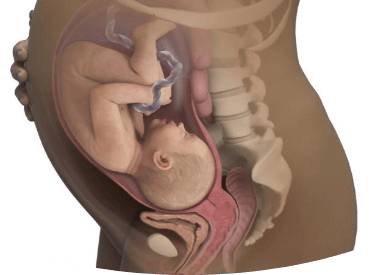
Your tummy will have a feeling of fullness throughout this week, as your baby is now grown and lacking in space. If you feel that the baby`s movements are changing, although they are not slowing down, it is because they do not have as much access to the space as before. What you will feel now will be sharp kicks or kicks instead of gentle movements. If you detect any slowdowns, it`s important to try and trigger the movement by drinking something cold or pressing lightly on your stomach. If the movements do not accelerate, this may indicate a problem and it is recommended to contact your doctor, who will then monitor the baby`s heartbeat and health.

At this time, the baby is ready to `fall` into your pelvic cavity. It will give a feeling of lightness, as the pressure of the uterus on the diaphragm is significantly reduced. Your protruding tummy will make it harder for you to walk, but it can be significantly reduced by using a belly sling for support.

As the skin on your abdomen is stretched to its maximum, the itching you experience will likely get worse. Combined with the fluctuation of hormones, the skin becomes dry and uncomfortable. Be sure to moisturize regularly and take the occasional warm oatmeal bath. Cold packs are also a great remedy for belly itch!

Ultrasound

Your wait is almost over and you are almost ready to meet your baby. Technology helps aspiring parents like you take another look at the baby before announcing its much-anticipated arrival into your world, and this is known as an ultrasound scan. This technique allows doctors to measure the babies’ size and position just before they are born. Ultrasounds are safer than x-rays as they do not expose the baby to radiation and are at the top of the list for prenatal tests. You can also request a 3D image and see what your baby actually looks like.

An important test this week is the Group B Strep (GBS) test. GBS, some bacteria commonly found in the vagina of healthy women, can be passed to the baby during delivery. Therefore, it is important to screen for this and take corrective action if necessary. The test is done with a vaginal swab or urine test. GBS in pregnant women is treated with oral antibiotics or by administering antibiotics intravenously during labor.

What to Eat?

At 36-week pregnancy, food choices may be the last thing in your mind as life becomes more and more chaotic and anxiety-driven. However, a healthy diet is essential to help your baby gain the right weight and get the desired nutrients. You may find that it can be difficult to eat large amounts of your favorite foods, and this is also true for other moms-to-be. Divide your meals into 5 to 6 small meals to get the essential nutrients needed and pass them on to your baby. Make sure you drink plenty of water. This is necessary to maintain circulatory volume in preparation for delivery.

Avoid very complex and spicy foods, chocolate and citrus fruits. Include spinach, fenugreek, cauliflower, broccoli, fruits such as grapes, figs and pomegranates in your diet. Include rich sources of vitamin K, as it`s packed with baby`s first food, colostrum. Vitamin K also helps heal wounds and plays an important role in strengthening your baby`s bones.

Tips and Care

Check out the tips below and the do`s and don`ts of week 36 of your pregnancy:

  1. Decide who will be your baby`s pediatrician (usually someone from the clinic where you delivered the baby) because the baby will be checked out as soon as it is born.
  1. Wear gloves and a face mask when handling cleaning fluids, phenyls and other chemicals during cleaning or washing.
  1. Decide where you want to give birth and be ready to go. Whether you decide to give birth at home or in a hospital, you will need help as soon as you start labor. Have the emergency contact number handy and pack a hospital bag for you and your baby.
  1. Read how to recognize and prepare for signs of labor. The best way to do this is to attend a prenatal class because it not only prepares you for birth but also gives you insight into newborn care.
  1. Preparing a hospital bag can be a little scary. Getting ready too early will have your bag staring at you for weeks, staying late is risky. It may be good to try to prepare 2-3 weeks before birth. You have enough time to first make a needs list, shop for what`s missing, and gradually pack your bags. You can start with the items you may need for yourself.
  1. If it`s time to pack a hospital bag, it`s time to talk about your delivery room. You have to decide what kind of room you want to spend the day in.

Don’ts

  1. Never work in closed rooms without proper ventilation as it can trigger panic attacks.
  1. Never skip a meal. Get all the essential nutrients that the baby needs in its last days.
  1. Avoid tobacco, cigarette smoke, carbonated drinks and caffeine as they stimulate the heart and brain and can be harmful to the baby`s health.

Shopping

As the deadline approaches, most expectant moms and equally enthusiastic dads rush to the nearest mom-and-baby store and start shopping in earnest. However, shop sensibly and on time, and don`t buy things that might not be needed right away. Here is a list to help you plan:

  1. Breast pump: It is recommended to take it to increase your milk, to make your nipples explicit or in an unforeseen emergency.
  1. Nursing supplies: Nursing bras, breast pads and nursing covers are essential items to have on your shopping list.
  1. Sanitary pads: Sanitary pads are required if you do not want to use those provided by the hospital.
  1. Baby needs: A stroller is something else you`ll need sooner or later, along with a baby car seat. Add it to your list.
  1. Announcements: Receive thank you cards to announce the birth to those who attended your baby`s party and supported you throughout your pregnancy.

The third trimester is a critical period for both mother and baby, so it`s important to take the right steps to protect and improve your physical and mental health. A happy and cheerful mother will have a stress-free birth, so it`s important that you stay relaxed and focused.

36 Weeks Pregnant: Baby Development and Symptoms

You`re approaching the finish line of this beautiful marathon! How your life changes every day, both physically and emotionally... Below is the information we will present to you this week, let`s read it.

Baby Growth

Your baby is growing and gaining weight by almost 28 grams each day, feeding off all the wonderful nutritious foods you eat throughout the day. The hair covering the baby has mostly fallen out and the wax-like substance that protects its skin has also worn off. This week it continues to store fat under its skin. The baby`s skull bones are not yet fused together so that the baby`s head can pass through the birth canal. Currently, most of your baby`s systems are well developed for living outside. Since it has always been fed from the umbilical cord until now, its digestive system is also ready to work, although it does not need it yet. In the first sip of its milk, its digestive system will be activated.

This week "My baby used to kick hard like it`s moving less than before." You may be worried. But now your baby`s place is tight and it is counting the days to go out as soon as possible. In the past, there was plenty of room in the womb to accommodate any movement. Now the circumstances have changed, the womb is cramped, it has room to turn and wiggle only.

It`ll be even more immobile especially when its head is firmly embedded in the bony roof. Therefore, it is very normal to feel a decrease in baby movements at 36 weeks. Don`t wait for crazy somersaults and kicks like before. But if you feel any abnormality in your movements, do not neglect to consult your doctor.

Usually between 32nd and 34th weeks of pregnancy, you can feel your baby`s head under your belly. The head gradually hardens as calcium is deposited in the fetal skull. So the head gives a different feeling.

As with the 36th week of pregnancy, the baby usually takes the position where it will stand still. But if it`s in an inverted position at 37 weeks, there`s also a chance it`ll still turn its head down. This probability decreases as you get closer to the end of your pregnancy.

Baby Size

At 36-week pregnancy, baby size is approximately 47.4 cm when measured from head to toe, and as the weeks go by, it gets bigger and takes up more room. The baby weighs about 2622 g. In addition, since the body is filled with fat day by day, it also loses its wrinkles. At this stage, your baby is very likely to move upside down. However, in some cases, the baby does not return. This is called the `breech position`. Although breech babies can be delivered vaginally, most doctors prefer to do a cesarean section if the baby still hasn`t turned when labor begins. Your baby is considered `premature` if a birth occurs at the end of 36 weeks.

Common Body Changes

You may feel that there is no room left for baby growth at this stage, but keep in mind that it continues to grow until the due date. Call your doctor if you notice swelling or sudden weight gain in your face, hands, ankles, and feet, as this may indicate preeclampsia. This is a pregnancy complication that leads to high blood pressure, swelling of the hands and feet, and high amounts of protein in the urine. It needs urgent medical attention.

During this time, you will have a feeling of tiredness. Along with these body changes that occur during pregnancy, you may also experience chronic fatigue from carrying your baby with you for about 9 months.

Pregnancy Symptoms

Contractions are the symptoms you should pay attention in the 36th week. It could be Braxton-Hicks contractions, which are contractions that occur before the actual birth, or it could be a real contraction where your baby has decided to announce its arrival early. Other symptoms like constipation, gas, and heartburn will be pretty similar to all the symptoms you`re already familiar with in the third trimester.

  1. Chest leakage: You may experience a thin, yellowish fluid leaking from your breasts during this period. This liquid is known as colostrum. It provides nourishment to the baby in the first days.
  1. Contractions: If your baby decides to make an early appointment with you, watch out for contractions. These contractions are like uterine contractions, sometimes felt in the back and feel like menstrual cramps. Braxton-Hicks contractions (false labor) may also occur. Note that the intensity of the contractions increases, peaks, and then decreases, as this can then be a true contraction.
  1. Frequent urination: As the baby descends into the pelvis, the pressure on your bladder will increase and this means you need to go to the toilet more often. While this is something you deal with throughout pregnancy, it will likely get worse at this stage.

Apart from these, heartburn and general fatigue are common symptoms at 36 weeks.

Abdomen

awsUrlImagetracker/gobek36.jpg

Your tummy will have a feeling of fullness throughout this week, as your baby is now grown and lacking in space. If you feel that the baby`s movements are changing, although they are not slowing down, it is because they do not have as much access to the space as before. What you will feel now will be sharp kicks or kicks instead of gentle movements. If you detect any slowdowns, it`s important to try and trigger the movement by drinking something cold or pressing lightly on your stomach. If the movements do not accelerate, this may indicate a problem and it is recommended to contact your doctor, who will then monitor the baby`s heartbeat and health.

At this time, the baby is ready to `fall` into your pelvic cavity. It will give a feeling of lightness, as the pressure of the uterus on the diaphragm is significantly reduced. Your protruding tummy will make it harder for you to walk, but it can be significantly reduced by using a belly sling for support.

As the skin on your abdomen is stretched to its maximum, the itching you experience will likely get worse. Combined with the fluctuation of hormones, the skin becomes dry and uncomfortable. Be sure to moisturize regularly and take the occasional warm oatmeal bath. Cold packs are also a great remedy for belly itch!

Ultrasound

Your wait is almost over and you are almost ready to meet your baby. Technology helps aspiring parents like you take another look at the baby before announcing its much-anticipated arrival into your world, and this is known as an ultrasound scan. This technique allows doctors to measure the babies’ size and position just before they are born. Ultrasounds are safer than x-rays as they do not expose the baby to radiation and are at the top of the list for prenatal tests. You can also request a 3D image and see what your baby actually looks like.

An important test this week is the Group B Strep (GBS) test. GBS, some bacteria commonly found in the vagina of healthy women, can be passed to the baby during delivery. Therefore, it is important to screen for this and take corrective action if necessary. The test is done with a vaginal swab or urine test. GBS in pregnant women is treated with oral antibiotics or by administering antibiotics intravenously during labor.

What to Eat?

At 36-week pregnancy, food choices may be the last thing in your mind as life becomes more and more chaotic and anxiety-driven. However, a healthy diet is essential to help your baby gain the right weight and get the desired nutrients. You may find that it can be difficult to eat large amounts of your favorite foods, and this is also true for other moms-to-be. Divide your meals into 5 to 6 small meals to get the essential nutrients needed and pass them on to your baby. Make sure you drink plenty of water. This is necessary to maintain circulatory volume in preparation for delivery.

Avoid very complex and spicy foods, chocolate and citrus fruits. Include spinach, fenugreek, cauliflower, broccoli, fruits such as grapes, figs and pomegranates in your diet. Include rich sources of vitamin K, as it`s packed with baby`s first food, colostrum. Vitamin K also helps heal wounds and plays an important role in strengthening your baby`s bones.

Tips and Care

Check out the tips below and the do`s and don`ts of week 36 of your pregnancy:

  1. Decide who will be your baby`s pediatrician (usually someone from the clinic where you delivered the baby) because the baby will be checked out as soon as it is born.
  1. Wear gloves and a face mask when handling cleaning fluids, phenyls and other chemicals during cleaning or washing.
  1. Decide where you want to give birth and be ready to go. Whether you decide to give birth at home or in a hospital, you will need help as soon as you start labor. Have the emergency contact number handy and pack a hospital bag for you and your baby.
  1. Read how to recognize and prepare for signs of labor. The best way to do this is to attend a prenatal class because it not only prepares you for birth but also gives you insight into newborn care.
  1. Preparing a hospital bag can be a little scary. Getting ready too early will have your bag staring at you for weeks, staying late is risky. It may be good to try to prepare 2-3 weeks before birth. You have enough time to first make a needs list, shop for what`s missing, and gradually pack your bags. You can start with the items you may need for yourself.
  1. If it`s time to pack a hospital bag, it`s time to talk about your delivery room. You have to decide what kind of room you want to spend the day in.

Don’ts

  1. Never work in closed rooms without proper ventilation as it can trigger panic attacks.
  1. Never skip a meal. Get all the essential nutrients that the baby needs in its last days.
  1. Avoid tobacco, cigarette smoke, carbonated drinks and caffeine as they stimulate the heart and brain and can be harmful to the baby`s health.

Shopping

As the deadline approaches, most expectant moms and equally enthusiastic dads rush to the nearest mom-and-baby store and start shopping in earnest. However, shop sensibly and on time, and don`t buy things that might not be needed right away. Here is a list to help you plan:

  1. Breast pump: It is recommended to take it to increase your milk, to make your nipples explicit or in an unforeseen emergency.
  1. Nursing supplies: Nursing bras, breast pads and nursing covers are essential items to have on your shopping list.
  1. Sanitary pads: Sanitary pads are required if you do not want to use those provided by the hospital.
  1. Baby needs: A stroller is something else you`ll need sooner or later, along with a baby car seat. Add it to your list.
  1. Announcements: Receive thank you cards to announce the birth to those who attended your baby`s party and supported you throughout your pregnancy.

The third trimester is a critical period for both mother and baby, so it`s important to take the right steps to protect and improve your physical and mental health. A happy and cheerful mother will have a stress-free birth, so it`s important that you stay relaxed and focused.