

Get our app

Download on the App Store

38 Weeks Pregnant: Baby Development and Symptoms

When the mother is in her 38th week of pregnancy, the baby is lowered into the pelvic area, where it can strike various super-sensitive nerves. This will give the mother multiple sensations in the legs as well as the vagina. Yes, the mother will have various new experiences during this period. The baby can be born at any time and until then it is best to try to relax.

Baby Growth

By the 38th week of pregnancy, the baby will be equipped with a strong and firm grip. The mother will experience this when she holds the baby`s hand for the first time after birth. All of the baby`s organs will be fully developed by this week and will be ready to experience life outside the womb. The baby will continue to throw lanugo and vernix. Amniotic fluid will be swallowed by the baby. This will then accumulate in the baby`s gut. The gut will also have bile, shed cells, and other waste products. This buildup in the baby`s gut will be the baby`s first bowel movement after birth. Other changes in week 38 are small but very important. The brain, as well as the baby`s nervous system, will continue to be fine-tuned.

Thinking about baby`s eye color? If the baby is born with brown eyes, the color will likely stay the same. If the baby was born with dark blue or steel gray eyes, it will likely remain blue in color or turn hazel, green or brown by 9 months of age. This is mainly because a baby`s eyes can gain some pigment in the first few months after birth. The color mostly darkens, but does not lighten.

It is normal for the baby to have some decrease in movements in the last weeks or days before birth. In the 38th week of pregnancy, the baby seems to be resting and gathering energy for the day it will be born.

Therefore, will baby movements decrease at 38 weeks of pregnancy? If you`re wondering, you should know that this is perfectly normal. But the number of movements should not decrease too much. So that fine line is important.

A decrease in the frequency of its movements may also mean that something is not right. To check this, you can lie on your left side and count how many times your baby moves. Call your doctor if it’s moving less than 4 times an hour or if you have other concerns about decreased movement.

Baby Size

The size of the baby can be compared to the size of a leek. When the mother is 38 weeks pregnant, the baby will be approximately 49.8 cm tall and weigh 3083 g.

Common Body Changes

At 38 weeks, the body experiences changes that mark the culmination of pregnancy, such as effacement and cervical enlargement. Some of these changes can be felt by the mother, such as the feeling that the baby is falling into the pelvic area. This can be determined by increased pressure in the pelvic area and decreased shortness of breath. The mother`s breasts may also leak. A yellowish liquid called colostrum is secreted, which is largely composed of antibodies and contains much less sugar and fat. Not all mothers experience this. This colostrum protects the newborn and is secreted with breast milk even after birth.

Pregnancy Symptoms

  1. Braxton Hicks contraction: The mother can expect to experience abdominal cramps or contractions known as Braxton Hicks contractions. If the painful contractions disappear while changing position, it is a false labor contraction. True labor contractions do not disappear with rest or changing positions.
  1. Troubled sleep: Mothers may be longing for a restful night because of pain or anxiety.
  1. Increase in vaginal discharge: There may be an increase in vaginal discharge, a thick mucus-like substance known as a mucus plug. The presence of this mucus plug is completely normal. This increase in discharge is due to the dilation of the cervix.
  1. An itchy tummy: The mother`s tummy is stretched to the maximum extent and becomes more and more tender. Moisturizing the umbilical skin can help in such cases. It is also recommended to consume plenty of fluids and water. A doctor should be consulted if a rash develops.
  1. Swelling in ankles and feet: This symptom can be alleviated by leaning back and raising the feet. Regular walks will reduce this swelling by providing blood flow.
  1. Anxiety: This is quite common among pregnant women. It`s good to keep the mind busy to relieve anxiety. Watching a movie or spending time with friends and family can be quite relaxing.

What are The Signs of Birth?

The birth process will be experienced differently by every woman. Some pregnant women may experience excruciating pain, while others may experience a tightening of the uterus. Water can burst even before you experience any of these contractions. In up to 15% of births, water comes before labor begins. It may discharge suddenly or be in the form of a leak. Once labor begins, the mother will begin to experience regular contractions that become more frequent and stronger. These contractions begin in the upper part of the mother`s uterus and usually travel downwards in a wave-like motion. These contractions push the baby downwards into the mother`s pelvis, thereby putting pressure on the cervix. Thus, the cervix is widened so that the baby can pass through the mother`s birth canal at the time of birth. If we explain the contractions in more detail, they are as follows:

  1. When it moves, the contractions increase instead of decreasing and do not get lighter when it changes its stance.
  1. Contractions become more frequent. Pain in the uterus at 38 weeks is one of the important symptoms. These pains may become more severe and regular over time. Thus, the opening of the uterus is provided.
  1. Each contraction does not have to be more painful or longer than the previous one. A contraction usually lasts about 30-70 seconds. But as the real labor process progresses, the intensity and frequency of contractions gradually increase.
  1. Initial contractions may resemble gastrointestinal problems or menstrual cramps and may resemble a feeling of pressure in the lower abdomen.
  1. Bloody show comes.

Encouraging the Birth

Initiating labor at 38 weeks of pregnancy may become a medical necessity due to complications such as gestational diabetes, uterine infections or placental problems. There are other situations where the doctor may recommend initiating labor, such as when the mother is bleeding or is expecting twins. This is nothing to worry about. It is not recommended to initiate labor naturally at the 38th week of pregnancy. Certain methods of doing this (nipple massage, intercourse, etc.) are considered unsafe. It`s better to get a doctor`s opinion, and even better if the mother waits to bring the pregnancy to its full term.

Abdomen
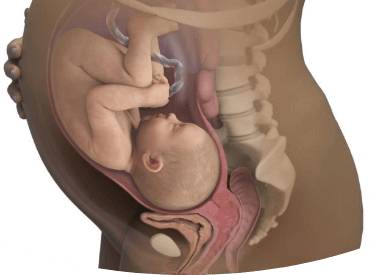
awsUrlImagetracker/gobek38.jpg

The mother`s belly at 38 weeks pregnancy is quite large, causing neck strain, back strain and fatigue. 38 weeks gestational weight does not change much anymore. During this period of pregnancy, many women do not gain much weight anymore, but they feel uncomfortable. This is because the baby is also gaining weight slowly this month. Some women may even lose half a kilo in the last days of pregnancy. By the time you give birth (according to your pre-pregnancy body mass index), you will have gained between 12-17 kilos. The recommended ideal weight gain is between 11-14 kilograms. The distance between the uterus and the pubic symphysis is about 36-38 cm. The size from the navel to the top of the uterus is almost 16-18 cm.

Ultrasound

During the last few weeks of pregnancy, the baby has grown to a larger size, which creates less room for movement inside the mother`s womb. If you have any concerns about the baby`s health and development, you may prefer an ultrasound examination. This will confirm the baby`s heartbeat and check if the heart rate is within the normal range.

What to Eat?

38th week pregnancy foods should basically contain the essential nutrient Choline. Choline helps improve brain function and not only helps you overcome the problems you may face due to the `pregnancy brain` (shrinking of the mother`s brain during pregnancy), but also helps the baby`s brain and spinal cord develop. Here are some choline-rich foods that you can include in your diet:

  1. Spinach
  1. Shellfish
  1. Liver
  1. Wheat seed
  1. Eggs
  1. Brussels sprouts
  1. Broccoli
  1. Peanut
  1. Chocolate milk
  1. Additionally, it`s a good idea to snack on high-energy foods that can provide strength for labor and help initiate breastfeeding. These include:
  1. Hazelnut
  1. Fresh fruit
  1. Raisins, apricots and other dried fruits
  1. Banana
  1. Cereal bars

It`s also important to stay hydrated this week, and having a bottle of fresh juice on hand will help.

Tips and Care

Here are a few tips and care for a mother in the 38th week of pregnancy.

  1. Make sure the contractions are regular. Try changing positions to see if they stop, as these can be Braxton Hicks contractions.
  1. Prepare for childbirth and breastfeeding by reading books about pregnancy.
  1. You can give birth at any time. How would you like to decorate the room where you will come back after this birth, hold your baby in your arms and greet your guests?
  1. It is very suitable for newborn photography, especially in the first 5-10 days of the baby. The baby still maintains its form in the womb. It is flexible and sleeps all the time. Baby acne has not yet occurred. If you want to take advantage of this time when you can have your baby`s best photos taken, you can get help from photographers who are experienced in taking photos of newborn babies.
  1. If you are considering seeking help from a caregiver after birth, or if you need to return to work shortly after birth, you should begin your caregiver search.

Don’ts

  1. Do not drink alcohol as it may affect the baby`s brain development.
  1. Do not overdo any work as it can cause trauma and fatigue.

Shopping

Here is the list of products that a mother should buy during this time:

  1. Breast milk storage bags and a breast pump
  1. Baby care equipment such as bassinet, changing table, swing, pushchair, baby cradle, baby bath and more
  1. Child-proof items such as bumpers for sharp edges and non-slip pads under carpets. As your baby grows, this list will need to be revised.
  1. Travel products such as car seats, strollers and baby carriers.

Now you are at the time when you need to be ready to go to the hospital to meet at any moment. It is very important to have your bags ready for the hospital. Prepare yourself mentally and emotionally for birth!

38 Weeks Pregnant: Baby Development and Symptoms

When the mother is in her 38th week of pregnancy, the baby is lowered into the pelvic area, where it can strike various super-sensitive nerves. This will give the mother multiple sensations in the legs as well as the vagina. Yes, the mother will have various new experiences during this period. The baby can be born at any time and until then it is best to try to relax.

Baby Growth

By the 38th week of pregnancy, the baby will be equipped with a strong and firm grip. The mother will experience this when she holds the baby`s hand for the first time after birth. All of the baby`s organs will be fully developed by this week and will be ready to experience life outside the womb. The baby will continue to throw lanugo and vernix. Amniotic fluid will be swallowed by the baby. This will then accumulate in the baby`s gut. The gut will also have bile, shed cells, and other waste products. This buildup in the baby`s gut will be the baby`s first bowel movement after birth. Other changes in week 38 are small but very important. The brain, as well as the baby`s nervous system, will continue to be fine-tuned.

Thinking about baby`s eye color? If the baby is born with brown eyes, the color will likely stay the same. If the baby was born with dark blue or steel gray eyes, it will likely remain blue in color or turn hazel, green or brown by 9 months of age. This is mainly because a baby`s eyes can gain some pigment in the first few months after birth. The color mostly darkens, but does not lighten.

It is normal for the baby to have some decrease in movements in the last weeks or days before birth. In the 38th week of pregnancy, the baby seems to be resting and gathering energy for the day it will be born.

Therefore, will baby movements decrease at 38 weeks of pregnancy? If you`re wondering, you should know that this is perfectly normal. But the number of movements should not decrease too much. So that fine line is important.

A decrease in the frequency of its movements may also mean that something is not right. To check this, you can lie on your left side and count how many times your baby moves. Call your doctor if it’s moving less than 4 times an hour or if you have other concerns about decreased movement.

Baby Size

The size of the baby can be compared to the size of a leek. When the mother is 38 weeks pregnant, the baby will be approximately 49.8 cm tall and weigh 3083 g.

Common Body Changes

At 38 weeks, the body experiences changes that mark the culmination of pregnancy, such as effacement and cervical enlargement. Some of these changes can be felt by the mother, such as the feeling that the baby is falling into the pelvic area. This can be determined by increased pressure in the pelvic area and decreased shortness of breath. The mother`s breasts may also leak. A yellowish liquid called colostrum is secreted, which is largely composed of antibodies and contains much less sugar and fat. Not all mothers experience this. This colostrum protects the newborn and is secreted with breast milk even after birth.

Pregnancy Symptoms

  1. Braxton Hicks contraction: The mother can expect to experience abdominal cramps or contractions known as Braxton Hicks contractions. If the painful contractions disappear while changing position, it is a false labor contraction. True labor contractions do not disappear with rest or changing positions.
  1. Troubled sleep: Mothers may be longing for a restful night because of pain or anxiety.
  1. Increase in vaginal discharge: There may be an increase in vaginal discharge, a thick mucus-like substance known as a mucus plug. The presence of this mucus plug is completely normal. This increase in discharge is due to the dilation of the cervix.
  1. An itchy tummy: The mother`s tummy is stretched to the maximum extent and becomes more and more tender. Moisturizing the umbilical skin can help in such cases. It is also recommended to consume plenty of fluids and water. A doctor should be consulted if a rash develops.
  1. Swelling in ankles and feet: This symptom can be alleviated by leaning back and raising the feet. Regular walks will reduce this swelling by providing blood flow.
  1. Anxiety: This is quite common among pregnant women. It`s good to keep the mind busy to relieve anxiety. Watching a movie or spending time with friends and family can be quite relaxing.

What are The Signs of Birth?

The birth process will be experienced differently by every woman. Some pregnant women may experience excruciating pain, while others may experience a tightening of the uterus. Water can burst even before you experience any of these contractions. In up to 15% of births, water comes before labor begins. It may discharge suddenly or be in the form of a leak. Once labor begins, the mother will begin to experience regular contractions that become more frequent and stronger. These contractions begin in the upper part of the mother`s uterus and usually travel downwards in a wave-like motion. These contractions push the baby downwards into the mother`s pelvis, thereby putting pressure on the cervix. Thus, the cervix is widened so that the baby can pass through the mother`s birth canal at the time of birth. If we explain the contractions in more detail, they are as follows:

  1. When it moves, the contractions increase instead of decreasing and do not get lighter when it changes its stance.
  1. Contractions become more frequent. Pain in the uterus at 38 weeks is one of the important symptoms. These pains may become more severe and regular over time. Thus, the opening of the uterus is provided.
  1. Each contraction does not have to be more painful or longer than the previous one. A contraction usually lasts about 30-70 seconds. But as the real labor process progresses, the intensity and frequency of contractions gradually increase.
  1. Initial contractions may resemble gastrointestinal problems or menstrual cramps and may resemble a feeling of pressure in the lower abdomen.
  1. Bloody show comes.

Encouraging the Birth

Initiating labor at 38 weeks of pregnancy may become a medical necessity due to complications such as gestational diabetes, uterine infections or placental problems. There are other situations where the doctor may recommend initiating labor, such as when the mother is bleeding or is expecting twins. This is nothing to worry about. It is not recommended to initiate labor naturally at the 38th week of pregnancy. Certain methods of doing this (nipple massage, intercourse, etc.) are considered unsafe. It`s better to get a doctor`s opinion, and even better if the mother waits to bring the pregnancy to its full term.

Abdomen

awsUrlImagetracker/gobek38.jpg

The mother`s belly at 38 weeks pregnancy is quite large, causing neck strain, back strain and fatigue. 38 weeks gestational weight does not change much anymore. During this period of pregnancy, many women do not gain much weight anymore, but they feel uncomfortable. This is because the baby is also gaining weight slowly this month. Some women may even lose half a kilo in the last days of pregnancy. By the time you give birth (according to your pre-pregnancy body mass index), you will have gained between 12-17 kilos. The recommended ideal weight gain is between 11-14 kilograms. The distance between the uterus and the pubic symphysis is about 36-38 cm. The size from the navel to the top of the uterus is almost 16-18 cm.

Ultrasound

During the last few weeks of pregnancy, the baby has grown to a larger size, which creates less room for movement inside the mother`s womb. If you have any concerns about the baby`s health and development, you may prefer an ultrasound examination. This will confirm the baby`s heartbeat and check if the heart rate is within the normal range.

What to Eat?

38th week pregnancy foods should basically contain the essential nutrient Choline. Choline helps improve brain function and not only helps you overcome the problems you may face due to the `pregnancy brain` (shrinking of the mother`s brain during pregnancy), but also helps the baby`s brain and spinal cord develop. Here are some choline-rich foods that you can include in your diet:

  1. Spinach
  1. Shellfish
  1. Liver
  1. Wheat seed
  1. Eggs
  1. Brussels sprouts
  1. Broccoli
  1. Peanut
  1. Chocolate milk
  1. Additionally, it`s a good idea to snack on high-energy foods that can provide strength for labor and help initiate breastfeeding. These include:
  1. Hazelnut
  1. Fresh fruit
  1. Raisins, apricots and other dried fruits
  1. Banana
  1. Cereal bars

It`s also important to stay hydrated this week, and having a bottle of fresh juice on hand will help.

Tips and Care

Here are a few tips and care for a mother in the 38th week of pregnancy.

  1. Make sure the contractions are regular. Try changing positions to see if they stop, as these can be Braxton Hicks contractions.
  1. Prepare for childbirth and breastfeeding by reading books about pregnancy.
  1. You can give birth at any time. How would you like to decorate the room where you will come back after this birth, hold your baby in your arms and greet your guests?
  1. It is very suitable for newborn photography, especially in the first 5-10 days of the baby. The baby still maintains its form in the womb. It is flexible and sleeps all the time. Baby acne has not yet occurred. If you want to take advantage of this time when you can have your baby`s best photos taken, you can get help from photographers who are experienced in taking photos of newborn babies.
  1. If you are considering seeking help from a caregiver after birth, or if you need to return to work shortly after birth, you should begin your caregiver search.

Don’ts

  1. Do not drink alcohol as it may affect the baby`s brain development.
  1. Do not overdo any work as it can cause trauma and fatigue.

Shopping

Here is the list of products that a mother should buy during this time:

  1. Breast milk storage bags and a breast pump
  1. Baby care equipment such as bassinet, changing table, swing, pushchair, baby cradle, baby bath and more
  1. Child-proof items such as bumpers for sharp edges and non-slip pads under carpets. As your baby grows, this list will need to be revised.
  1. Travel products such as car seats, strollers and baby carriers.

Now you are at the time when you need to be ready to go to the hospital to meet at any moment. It is very important to have your bags ready for the hospital. Prepare yourself mentally and emotionally for birth!