


At the 39th week, the baby is fully developed and ready to step into the world. It is quite normal to feel discomfort and pain during this period. Your body will go through a few small but important changes like regular contractions that will prepare you for labor.
Baby Growth
At the 39th week of gestation, the baby will reach birth size and weight. The baby can now be considered a full-term fetus. Here are some steps your baby take this week:
- At this stage, the baby`s brain is still developing rapidly. This rate of brain development will continue throughout the first three years after birth.
- The baby will also have enough body fat to help keep warm after birth.
- Nutrients and antibodies are continued to be supplied to the baby by the mother`s placenta during the period, which helps the baby fight any disease.
- As the outer layers of the skin begin to shed, the baby develops new skin.
At 39 weeks of pregnancy, it has become difficult to feel baby movements. Because there is not much room to move inside. Therefore, it has become difficult for the baby to move, kick and somersault in the gradually narrowing space.
On top of that, now that the baby`s head is lowered into the pelvis and the head is placed on the bone roof, it seems to you even more motionless. As long as you feel small movements until birth, there is nothing to be afraid of. But the problem is that you don`t feel any movement.
At 39-week pregnancy, the baby may also be very active. If these movements are very fast, excited, intermittent and violent, you should inform your doctor. It`s best to write down how you feel about your baby each week and share it with your doctor.
Baby Size
At 39 weeks pregnant, the baby will be approximately 50.7 cm tall and weigh 3288 g.
Common Body Changes
Common body changes at week 39 are a heavy uterus and increased pelvic pressure.
Pregnancy Symptoms
Most of the symptoms are signs of imminent delivery. These are:
- Braxton-Hicks contractions: There will be tightening or cramping in the uterus. Such false alarms start from the front of the body and tend to subside when positioned. True labor can be recognized by regular and frequent cramps that begin in the upper part of the uterus. If you`re asking how to distinguish between false and real contractions:
Now that you have a little time left, you can attribute all the pains and contractions you experience to the birth. However, these symptoms can also be false. We have some suggestions for you to distinguish between contractions at 39 weeks of pregnancy:
- Take a watch and determine the time of contractions. Measure the time from the start of one to the start of the next. True labor pains have a pattern and become more frequent over time. In false preparation pains, the contractions come in an irregular way.
- Also, measure the time between when the contraction starts and when it ends. True contractions initially last for 30-45 seconds, gradually increasing and exacerbating to 75 seconds. The duration and intensity of preparatory contractions are variable.
- Pressure in the pelvic area: During these last few days, the baby may have descended into the pelvis and may feel uncomfortable and heaviness in your lower body.
- Feeling like lightning hits in the groin area: Due to the baby`s lowered position, any movement of the baby can hit various nerves that are very sensitive. Because of this, you may experience sharp sensations like lightning in the pelvic area.
- Emotional transitions: Many of you will have the urge to clean the house before the baby is born!
- Mucus or blood: You may see a mucus plug at 39 weeks of pregnancy. This is a thick discharge that may have some blood in it. This situation, known as bloody show, has often been accepted as an early sign of birth.
What are the Signs of the Birth?
There are several signs that are the body`s way of notifying the baby`s arrival. Knowing these signs is very important. Usually, these symptoms will be very different and quite strong from other pregnancy symptoms and therefore easily recognizable by you. If you experience the following symptoms you will need to call your obstetrician or visit the hospital:
- Burst or flow of water: You may feel a slow trickle of water down your legs. This could mean that your amniotic sac has ruptured and will likely go into labor within a few hours.
- Frequent contractions at regular intervals: If you are having frequent contractions, you should time these contractions and check for a decrease in the interval between them. If they are regular, it means you are in the early stages of labor. However, it is unclear how long this phase will last. At week 39, some pregnant women don`t experience any labor symptoms, which is fine. Because the longer the baby stays in the mother`s womb, the more it will develop, until it expires!
While some pregnant women experience labor symptoms such as an enlarged cervix, frequent contractions for a few days or even a few weeks before giving birth, there are many women whose cervix opens from 0 to 10 cm in just a few hours.
Triggering the Birth
At this time of pregnancy, you may want to know about natural methods you can try at home to induce labor. There are a few safe methods you can try (You should definitely try it by consulting your doctor!):
- Take a walk: Taking a long walk can work. There is no scientific proof of this method, but experts believe that gravity helps push the baby into the mother`s cervix, and this pressure will expand the cervix.
- Acupuncture: This is another method without scientific proof. This age-old practice is said to regulate blood flow, thereby stimulating cervical dilation.
- Sex: Experts believe that having an orgasm can help start labor pains.
The doctor may also recommend that you go through medical induction by giving you some Pitocin. Reasons for this include various complications such as gestational diabetes, heart conditions, preeclampsia, placental problems and uterine infections. Doctors also recommend medical induction for pregnant women who are at 39-week pregnancy and carrying twins, or if the pregnant woman has not gone into labor even after the water has come.
Abdomen
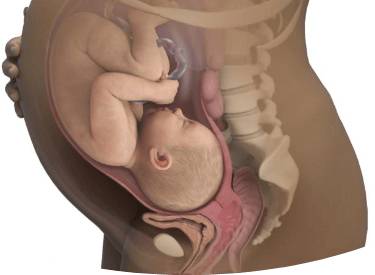
In the 39th week of pregnancy, there is almost no space left in your belly due to the continuous growth of the baby. The skin on the navel will be completely stretched. To alleviate the discomfort, various pregnancy exercises can be done.
Having the baby`s head lowered into the pelvis can now make it easier for you to breathe and make it harder for you to walk. You can even waddle.
It is very possible that you will feel like a giant during this period. Now the uterus has filled most of your pelvis and abdomen and there is no more room for growth. That`s why your uterus is now below your ribs and the measurements don`t change much from week to week.
Ultrasound
An ultrasound examination is often recommended to ensure that the baby is in the best possible position for a normal and safe delivery. This is when the baby is in the head-down position. During this week, the sonographer will get a 75% view of the baby`s face where even eyelashes are visible.
What to Eat?
There is no scientific evidence that foods can induce labor. However, there is a belief that certain foods, such as dates, experienced by women can trigger childbirth. 39th week pregnancy foods contain ingredients that are easy to digest. It is recommended to avoid fatty foods, dairy products and meat.
Tips and Care
- Consume easily digestible foods as otherwise the digestive system will be strained.
- Make sure your hospital transportation plan is ready.
- Do not forget that you must first strengthen the pelvic floor muscles in order to facilitate childbirth!
- You can learn and practice exercises that will facilitate childbirth.
- Did you know that your baby in the womb can sense the outside frequencies at a very early date? If your baby feels it, then you can give positive suggestions to your baby in its last days in the womb.
Don’ts
- Do not consume dairy products, meat and fatty foods during this period as they force the digestive system.
- Many of you experience a symptom called `nesting` as the deadline approaches and you may tend to overexert yourself. While it`s okay to tidy the house, ask your family for help or hire a cleaner.
- Be sure to take a firm step when walking in and out of the bathroom, especially when walking on stairways and slippery floors, as you are getting heavy.
- Make sure that the means of transportation you use do not shake you.
Shopping
- Breast pump, breast milk storage bags and similar breastfeeding products
- Diapers, wet cotton and similar baby care products
- Make sure you have everything you need for your maternity bag and postpartum baby and puerperal care.
The approach of the deadline may cause some concerns. Reading what you`ll be going through is the best way to gather the information needed to deal with the last few weeks of pregnancy and delivery. Be relaxed, happy and prepared as it`s time to meet your baby!