


Congratulations on getting to this point, because week 40 means you`re about to officially meet your baby very soon! Many pregnant women take precautionary steps and prepare for the baby`s arrival by reading various pregnancy-related materials. We are here to support you too!
Baby Growth
Your baby is making remarkable progress as it develops in the womb. Some of these developments are:
- Stratification over fat: 15% of your baby`s body will be made up of fats that help the baby regulate body temperature.
- Nails and hair continue to grow: At the 40. week, your baby`s nails and hair are still growing.
- Lung adaptation: The lungs are highly developed to breathe outside air.
- Antibodies: The placenta gives your baby all the antibodies needed to prevent infections for the first 6 months of life.
- Vision develops: Baby`s eyesight is initially blurred and can focus on objects only a few inches away.
Apart from these developments, there are other important changes that can be seen in its body. For example, the bones in the skull will not fuse completely to allow your baby to pass through the birth canal smoothly.
Your baby`s body can now successfully break down bilirubin through the placenta, where it is expelled along with other waste products. After the baby is born and the umbilical cord is cut, its body will need to get rid of bilirubin on its own. This normally takes a few days. Sometimes it accumulates in the baby`s body and therefore the baby can get jaundice. In this case, it is necessary to feed abundantly, to excrete bilirubin in the urine and sometimes to light therapy.
Baby Size
At the 40th week of pregnancy, the baby will weigh around 3462 g and be 51.2 cm tall (although many babies born smaller or larger will grow up to be healthy). Your baby will now be the size of a watermelon.
Common Body Changes
It is important to know that it is not necessary for your water to precede the onset of labor. In fact, very few women experience this. Even if your membrane ruptures, there will be a slow trickle or leak or even a small flush.
Pregnancy Symptoms
Pregnant women may experience the following symptoms:
- Leg cramps: The baby at this stage will fall lower in the pelvis, thus increasing the discomfort in the pelvic area. This is very common in week 40.
- Insomnia: Not being able to sleep is normal because anxiety can keep you up at night. You may want to do relaxing activities such as reading a book or writing a journal. Getting plenty of rest is recommended.
- Fatigue: You will feel tired because you cannot sleep properly. So make sure you have some peace and quiet environment to help you relax.
- Contractions: Those false contractions (Braxton-Hicks) you`ve probably had for a while may actually `not so false` anymore. Time your contractions to analyze how long and ranged they actually are. If the time difference between the two contractions is very short, you may actually be in an early stage of labor.
What are the Signs of the Birth?
Even at the 40th week, there may be no signs of labor. However, you can expect these signs to come soon:
- Frequent, rapid contractions: You should go to the doctor when you start to have contractions that bother you or that keep coming at regular intervals.
- Water leak: You can check for amniotic fluid leak. This means that the water is torn. You can easily distinguish amniotic fluid from normal discharge. The flow of amniotic fluid will not stop unlike a regular discharge.
Encouraging the Birth
There are many ways to do this:
- Membrane stripping: The doctor will insert its gloved finger into the cervix and sweep the membrane. This helps produce prostaglandins that help soften the cervix and induce labor. You may experience intense cramping and some bleeding at this time. This procedure can be a little inconvenient.
- Enlargement or maturation of the cervix: If the cervix is not ready for delivery, the doctor may initiate labor with the help of certain medications. Synthetic drugs called prostaglandins will induce labor. These can be taken orally or inserted into the vagina.
- Rupture of the amniotic sac: The amniotic sac may rupture to initiate labor. This is called an amniotomy. Here, the doctor will tear the amniotic sac using a thin plastic hook. This is done only when the baby`s head is down or in the presence of a partially dilated cervix. For some women, the pain can occur within a few hours after the water burst. However, it should be noted that this varies for every woman.
- Pitocin: These are synthetic hormones that can trigger labor or strengthen contractions.
Abdomen
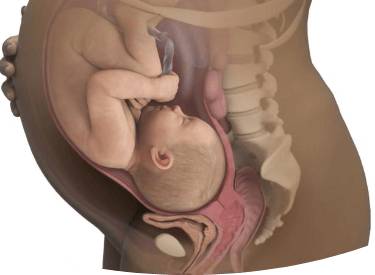
Two weeks after the calculated due date, if you are still pregnant, the deadline has officially been exceeded. 12% of women experience late pregnancy. The good news is that the baby should arrive somehow, and the bad news is that it may take another two weeks at the most.
Ultrasound and Doctor Control
An ultrasound of the baby at this stage will let doctors know how developed the baby`s lungs are. A test will be done to monitor the baby`s movements and see how its heart rate rises during contractions. If the test results show that the baby will do better outside than in the womb, labor may be started.
I`m 40 Weeks Pregnant I Have No Pain What Should I Do?
In the expectant mother who has completed the 40th week of pregnancy, the pains that indicate the birth may not have started, in this process, she will go for a check-up once every 3 days. It is checked whether the baby is well inside or not. Because after the 40th week of pregnancy, the baby is at risk. In this examination:
- Baby movements felt by the mother,
- NST (non-stress test) to the baby`s heartbeat,
- With ultrasound, the baby`s fluid and respiratory movements are checked. If there is an abnormality in these and the baby is in a worsening condition, the mother is taken into labor.
You can also be one of the expecting mothers saying "I`m 41 weeks pregnant, I have no pain". If the cervix can handle artificial pain, delivery is usually preferred. Because every passing time can pose a risk to the baby.
What to Do If There Is No Birth at the 40. Week?
Pregnancy exceeding 40 weeks does not mean there is a problem. Almost half of all pregnancies exceed 40 weeks. It even extends up to the 41st or 42nd week. But the doctor will not let it exceed 42 weeks.
Less than 5% of babies are born on the expected date. But a baby who`s exceeded its day often doesn`t actually exceed its day. The date was set wrong from the beginning.
Although rarer, a baby may actually have exceeded its day. In such cases, when the baby comes out, its skin is usually dry, cracked, peeling, sagging and wrinkled, but all of these are temporary. The reason for this is that the vernix layer that protects the skin has disappeared in the previous weeks as the date of birth approaches.
If the pregnancy exceeds 40 weeks, the fetus` nails and possibly hair will be longer. It will also have almost no baby hair on its skin. It will also be born more alert, open-eyed, and attentive.
When Should You Go to the Hospital?
Many couples are advised to go to the hospital 1 hour after contractions that come at intervals of 5 to 10 minutes. However, if the hospital is too far, transportation is difficult, and the weather is bad, it is better to leave the house as soon as possible.
If the birthing process hasn`t really started yet, you run the risk of being sent back home when you go to the hospital. When you go, you will be evaluated for signs of the birth process and the decision will be made accordingly.
Do not feel disappointed, unhappy or angry if you are sent home. Because whether many women enter the birth process or not is fully understood by the birth process control in the hospital. This is not something to be understood on the phone. Some hospitals, instead of sending you back, put you on hold in a room until your birth can occur.
Stages of the Birth: What Will Be in the Hospital?
- Expectant mothers are admitted to the delivery room when they reach the hospital after their birth has started. First, the first examinations and uterine openings are determined.
- Ultrasound is done to see recent changes. The approximate weight reached by the baby is recorded.
- NST is applied to see the baby`s current heartbeat and uterine contractions.
- If there is no situation that requires a cesarean section, the expectant mother is taken to a room to be examined periodically.
- Although it is not possible in most public hospitals, it is important for the father-to-be to be in the room while the uterine contractions are becoming and to support the mother-to-be.
How Much should the Cervix Be Opened to Give Birth?
Until the birth occurs, the baby`s heartbeat is listened at intervals of about 20 minutes, and the opening of the cervix is checked at intervals of 1 hour. Delivery occurs when the cervix dilation reaches 10 cm.
It may take 1.5-2 hours for the cervix to increase by 1 cm, especially in mothers with a first pregnancy. When the baby`s head is visible through the vagina during uterine contraction, the expectant mother is placed on the delivery table.
Postpartum Mother and Baby
- First, the baby`s head comes out of the vagina with a few strong contractions and sufficient straining of the expectant mother.
- The doctor first wipes the inside of the baby`s mouth with a cloth. It then gently pulls the baby in suitable positions, allowing it to be fully born. And the delivery room begins to resonate with the baby`s voice.
- The baby is about 50 cm and 3700 grams this week. On the one hand, while the umbilical cord is clamped and cut, the baby is left on the mother`s belly and the first contact with the mother is ensured.
- Afterwards, the baby is dried, warmed, cleaned and dressed.
- The doctor removes the mate (placenta) of the baby, which is still in the womb. It checks the birth path and vagina for possible tears.
- Especially in first pregnancies, the episiotomy is repaired to facilitate the exit of the baby.
- Afterwards, the baby is placed on the lap of the expectant mother who is taken to baby bed. And finally, the mother has the opportunity to meet with her baby`s eyes for the first time.
What to Eat?
Below is a list of week 40 pregnancy foods that a mother can consume during this period:
- Toast: It should be kept soft, but consume enough to give plenty of energy without straining the digestive system.
- Pasta: Soft pasta is recommended as it provides a good carbohydrate support for the tiring effort that occurs during childbirth.
- Juice and water: These are easy to consume and act as energy boosters.
Tips and Care
Below are a few tips a mother can follow to induce labor (consult your doctor!):
- Nipple stimulation: Nipple stimulation releases the hormone oxytocin, which causes uterine contraction. But this should only be done if the doctor approves.
- Walking: Walking helps trigger labor by allowing the baby to move further down the birth canal. This also reduces the discomfort women feel when experiencing contractions.
- Spicy foods: Spicy foods are not proven to cause labor, but you can try eating foods that contain lots of garlic and cumin to induce labor.
- Sexual intercourse: This helps to induce labor and also makes your partner and you feel closer to each other.
Exercises
Some women do not want to use medication during labor to relieve pain. They prefer to give birth in the most natural way possible, using different positions, massage, hypnotherapy, breathing and relaxation techniques. Such methods are often shown in childbirth preparation courses. You can get support from different relaxation techniques that will help you calm down in the last weeks of pregnancy. Let`s talk briefly.
1. Progressive Muscle Relaxation
Beginning with your head or feet, you can relax one muscle group at a time and work your way up to other parts of the body in turn.
2. Tap Relaxation
Starting from the temples, your partner can make firm but gentle touches to the neck, shoulders, back, arms, hands, legs, feet for a few seconds. You can also relax the muscles in the areas he touched at that time.
3. Massage
Again, your partner or someone who has received pregnancy massage training can massage your back, shoulders, legs, arms. He can touch your forehead and temples with small circular movements. These movements help relax the muscles and release the hormone endorphins. With various trials, you can definitely find a massage technique that will be good for you.
4. Guided Visualization
Imagine that you are in the place where your imagination takes you, that you love so much, that is peaceful, that comforts you. Maybe a lush plateau high up, a vast seaside, maybe a forest covered with dense trees, maybe near a fireplace, maybe the pages of your favorite story… Details, sounds, smells, colors, music… You can get help from these to relax.
5. Breathing Exercises
Breathing exercises are one of the most effective methods to reduce pregnancy-related complaints and facilitate the birth. That`s why you should do it regularly throughout your pregnancy.
6. Meditation
With this mind and body technique, you focus your attention on breathing or repeating a word, phrase or sound. By meditating, you can interrupt the stream of thought that invades your consciousness. Thus, when your normal thoughts are temporarily suspended, you enter a state of physical relaxation and mental calm.
7. Breathing Techniques
You should breathe through your nose, feeling the cool, clean air filling your lungs. You have to exhale through your mouth, imagining that you have released all your tension. You should practice breathing slower and faster than usual. The more you internalize your breathing work during pregnancy, the easier it will be to practice when labor pains come. Give particular weight to this as of the 40th week of pregnancy.
Don’ts
- Caffeine: In addition to increasing insomnia, coffee is also known to increase the likelihood of diabetes for the child.
- Smoking: Even if you don`t smoke, exposure to smoke can cause respiratory disease in the unborn child.
- Travel is not recommended during the last weeks of pregnancy. If you encounter such a situation, do not take action without talking to your doctor.
- Apart from daily exercises, you should stay away from movements that will tire you.
- You should take care not to gain weight during the last week of pregnancy.
- You should avoid movements that may cause pressure on your stomach.
Shopping
- Diapers
- Alcohol-free hand sanitizers
- Waterproof and soft crib mattress protector pads
- Chest apron
- Pacifier and baby bottle wipes
- Nipple cream.
Now that the baby is ready to arrive at any time, watch for any signs that may indicate the onset of labor. Also, make the necessary arrangements so that you can go to the hospital without any hassle when the time comes. When you meet it, don`t forget to talk a lot and say welcome. Because it will recognize your voice and its father`s voice.